



Spartan DEKA Race Equipment Review
The Spartan DEKA race is often described as a “decathlon for everyday athletes,” and that description is accurate for one key reason: the equipment is standardized, repeatable, and brutally honest. Unlike obstacle races where terrain and weather can change everything, DEKA is about how well you handle very specific pieces of equipment under fatigue.
This Spartan DEKA race equipment review breaks down each of the 10 DEKA Zones, explaining what equipment is used, the required weights or distances, and—most importantly—what each station actually tests. Whether you’re racing DEKA FIT, DEKA MILE, or DEKA STRONG, the tools are the same. Only the running volume changes.
Understanding the DEKA Race Format
Before diving into the equipment, it’s important to understand how DEKA events are structured:
- DEKA FIT: 10 zones with 500 meters of running before each zone (5K total)
- DEKA MILE: 10 zones with 160 meters of running before each zone (1 mile total)
- DEKA STRONG: 10 zones, no running
The consistency of the equipment is what makes DEKA unique. You can train precisely for what you’ll face on race day—and your performance reflects exactly how well you prepared.
The following format is for DEKA Fit races, probably the most popular of the 3.
Zone 1: RAM Alternating Reverse Lunges
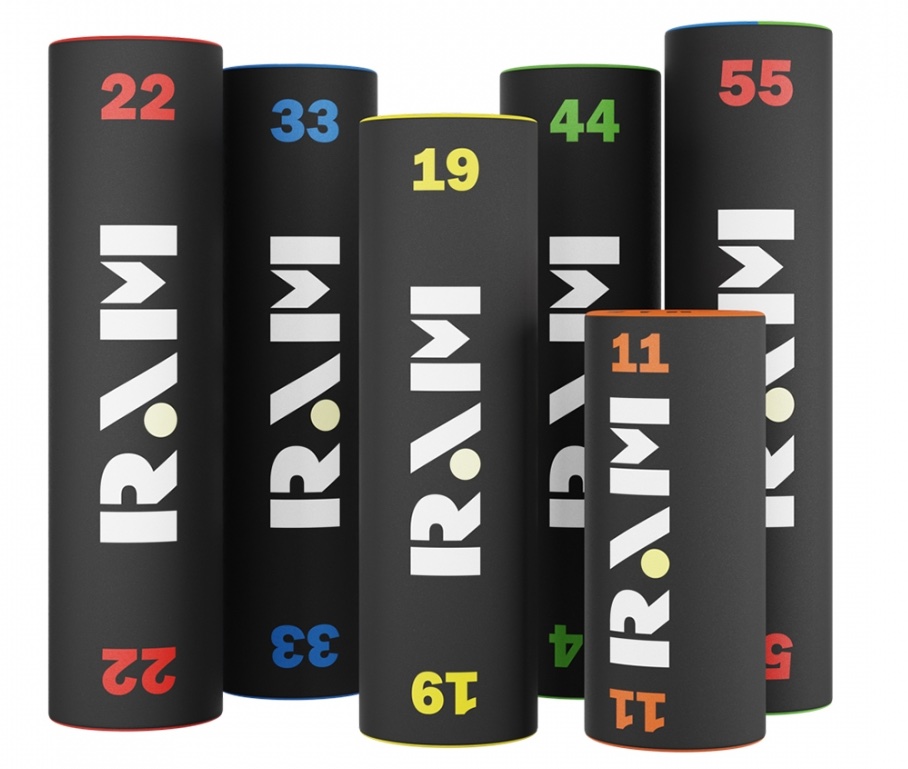
Equipment: Spartan RAM
Reps: 30 total alternating lunges
Weights:
- Men: 55 lb RamRoller
- Women & Men 65+: 33 lb RamRoller
- Youth / Women 65+: 22 lb RamRoller
The Spartan RAM is a cylindrical, offset load that forces constant core engagement. Unlike a barbell, it shifts slightly as you move, making balance a real factor. Starting the race with lunges immediately elevates the heart rate and forces athletes to respect pacing from the very beginning.
Common no-reps / penalties (what gets you burned):
- Knee doesn’t touch the ground.
- Side-stepping/rotating (must step straight back; shoulders stay parallel to the “rep line”).
- Not finishing a rep with both feet back in front of the rep line + full extension.
- Dropping/throwing the RAM at the end (must return it to the start area cleanly).
Tips:
- Yes, it’s alternating: left = 1, right = 1 → 30 total = 15 per leg.
- Smooth > fast. A rushed lunge often becomes 2–3 no-reps and costs more time than “steady.”
- Zone 1 and Zone 10 both use the RamRollers. Zone 10’s RamRoller will be lighter, but you will be using it to do 30 burbees.
Equipment Used: Spartan DEKA races use what is called a RamRoller. A RAM Roller (often called the Spartan RAM) is a cylindrical, sand-filled weighted implement used in Spartan DEKA and Spartan OCR events. It’s designed to be awkward on purpose, forcing athletes to stabilize the load rather than just lift it.
Because the weight can shift slightly inside, the RAM Roller creates instability that challenges your core, balance, and control more than a barbell or dumbbell of the same weight.
Zone 2: Row Ergometer
Equipment: Rower
Distance: 500 meters
This is one of the most “honest” zones in DEKA. A rower punishes poor technique and rewards efficient leg drive. Because it comes early, athletes who pull too hard often pay for it later in the race—especially during DEKA FIT.
The rower is also used in HYROX races usually on a Concept 2, but the distance is 1000 meters instead of 500 meters.
Standards / no-reps:
- You must remain seated until the monitor reaches the required meters (don’t pop up at 498m).
Tips:
- Settle into a pace you can repeat—overcooking the row blows up your breathing for Zone 3.
- If you are thinking about purchasing a new rower, my advice is to buy the Rogue Echo Rower. IMO it is better than the current Concept 2 RowErg.
Youth note: Youth 10–13 is 250m for row (unless paired with an adult on a team).
Common brands at races (approved list):
- Concept2 RowErg
- Technogym Rower
- Assault Rower
- Xebex Air Rower
- Gym Gear Row Max 2.0
- Rogue Echo Rower (Will probably be showing up soon) It is the closest to the Concep2 RowErg

Zone 3: Box Jump / Step Over
Equipment: Plyometric box
Height: 24 inches (minimum)
Reps: 20
This zone tests explosive power and coordination. Many athletes opt for controlled step-overs rather than jumps to preserve energy. The real challenge isn’t the height—it’s managing leg fatigue without breaking rhythm.
Standards / no-reps:
- You must make contact with the top (you cannot clear the whole box without touching it).
- Rep counts when both feet land on the ground on the opposite side from where you started.
- “Side-skirting” the box is not allowed—your body must travel over the top.
Tips:
- Step-overs are often the best “speed per heart rate” choice.
- Think: up, touch, over, land—same cadence every rep.
Equipment: 24-inch (60 cm minimum) plyo box — Spartan notes any brand/material is allowed. We love our Torque Fitness Plyobox.
Zone 4: Med Ball Sit-Up / Thro
Equipment: Medicine ball
Reps: 25
Weights:
- Men: 20 lb
- Women & Men 65+: 14 lb
- Youth / Women 65+: 10 lb
In DEKA FIT, this station combines core strength with repeated ground-to-throw movement. It’s deceptively tiring, especially when breathing is already elevated from the run and previous zones.
Common no-reps:
- Not hitting full “bottom” (shoulders don’t clearly return down).
- Shorting the throw / losing control of the ball.
Tips:
- Exhale on every throw—this keeps your midline from getting fried.
- Break into mini-sets (e.g., 10-8-7) if your core starts cramping.
Zone 5: Ski Ergomete
Equipment: SkiErg
Distance: 500 meters
The SkiErg shifts the workload to the upper body and posterior chain. Athletes with strong pulling mechanics often gain time here, while others struggle to maintain rhythm. Grip endurance becomes a factor for the first time in the race.
Common brands at races (approved list):
- Concept2 SkiErg
- Gym Gear Ski Max 2.0
No-rep / penalty pitfalls:
- Stepping off before the monitor hits the distance.
- Letting the handles “snap” back wildly (judges can stop unsafe movement).
Tips:
- Use your lats + hinge slightly; don’t turn it into a tiny-arm workout.
- Smooth strokes beat violent pulls.
Youth note: Youth 10–13 is 250m ski.
Zone 6: Farmer’s Carry
Equipment: Dumbbells (or kettlebells, event-dependent)
Distance: 100 meters
Weights:
- Men: 2 × 60 lb
- Women & Men 65+: 2 × 40 lb
- Youth / Women 65+: 2 × 20 lb
This is a grip-dominant zone that punishes poor posture. The load itself isn’t extreme, but carrying it while fatigued exposes weak bracing and shoulder stability quickly.
Common penalty situations:
- Not completing the full distance.
- Dropping outside the allowed rest/turn areas (judge discretion based on venue layout).
Tips:
- Short steps, tall posture, shoulders “packed.”
- If grip is failing: set down cleanly, regrip, go.
Zone 7: Air Bike
Equipment: Air bike
Target: 25 calories
Often considered the most uncomfortable station, the air bike forces full-body effort with no hiding. Athletes who try to “muscle through” typically blow up here, while those who stay steady can recover slightly before the final zones.
Common brands at races (approved list):
- AssaultBike
- Rogue Fitness Bike (commonly the Echo-style bike)
- Xebex Air Bike
- Gym Gear Tornado Air Bike
- Torque Stealth Air Bike
No-rep / penalty pitfalls:
- Hopping off before the calories hit (especially if the display lags a second).
- Grabbing the wrong bike if lanes are assigned.
Tips:
- Don’t “panic sprint” the first 5 cals. Build to pace, then hold.
- Push with legs, let arms assist—full-body rhythm wins here.
Youth note: Youth 10–13 is 12 calories.
Zone 8: Dead Ball Shoulder Ove
Equipment: Dead ball
Reps: 20
Weights:
- Men: 60 lb
- Women & Men 65+: 40 lb
- Youth / Women 65+: 20 lb
This zone demands posterior chain strength and efficient movement patterns. Picking the ball cleanly, using the hips, and controlling the descent saves massive energy over 20 reps.
Common no-reps:
- Ball doesn’t clearly reach the shoulder/top standard for that event setup.
- Unsafe tossing/slamming.
Tips:
- Hinge → lap → pop to shoulder (use hips).
- Alternate shoulders to avoid a one-side blow-up.
Zone 9: Sled Push and Pull
Equipment: Magnetic resistance sled
Distance: 100 meters total
Depending on the sled model used, resistance is standardized via weight plus resistance settings. This zone is slow, heavy, and mentally taxing. It rewards patience and strong bracing more than raw speed.
Equipment you’ll see (this is the most standardized zone):
- Xebex XT3 PLUS / XT4 sled with 160 lb / 73 kg added
- Torque Tank M4 / MX (magnetic resistance)
Resistance settings (typical):
- Xebex: Men 8, Women & Men 65+ 7, Youth 10–13 & Women 65+ 5
- Torque Tank: Men 3, Women & Men 65+ 2, Youth 10–13 1
Standards / common penalties:
- You must push until 100% of the sled crosses the line.
- On pulls: do not wrap straps around the sled; straps must be attached correctly.
- Total work is typically executed as 5 rounds of 10m push + 10m pull (100m total).
Tips:
- Push: low body angle, short steps.
- Pull: hand-over-hand, keep walking back—don’t “curl” the sled.
Zone 10: RAM Burpees
Equipment: Spartan RAM
Reps: 20
Weights:
- Men: 44 lb
- Women & Men 65+: 22 lb
- Youth: 11 lb
The final test combines conditioning, strength, and mental toughness. Performing burpees while handling an external load ensures there’s no easy finish—even for elite athletes.
Common no-reps:
- Chest doesn’t clearly hit the bottom standard.
- Not standing tall/finishing the rep cleanly.
- Sloppy RAM handling (dropping it in a way judges deem unsafe).
Tips:
- Small sets (e.g., 8-6-6) keep you moving.
- Consistent cadence beats “hero reps” that turn into no-reps.
“Universal” DEKA penalties to mention in your article
DEKA generally doesn’t hit you with time penalties like OCR—your penalty is repeating work:
- No-rep = redo the rep (immediate time loss)
- Wrong weight = reps don’t count (you may have to restart that zone)
- Unsafe movement / ignoring judge instruction = warnings, stoppage, forced correction (and lost time)
Overall Equipment Impressions
The brilliance of DEKA lies in its equipment selection. Nothing is overly technical, yet every station exposes inefficiency. The loads are challenging but accessible, making the race approachable for first-timers while still brutally competitive at the elite level.
Unlike traditional obstacle races, success in DEKA isn’t about gimmicks—it’s about engine, strength, and execution.
Who the Spartan DEKA Race Is Best For
- Hybrid athletes who enjoy measurable progress
- CrossFit, HYROX, and functional fitness competitors
- Runners looking to add structured strength challenges
- Anyone who prefers standardized racing over unpredictable obstacles
Final Thought
This Spartan DEKA race equipment review highlights why DEKA has become one of the fastest-growing fitness race formats. The equipment is simple, purposeful, and relentlessly fair. Every weakness shows, every strength counts, and every second is earned.
If you train for the tools listed above, you’ll know exactly what race day demands—and that clarity is what keeps athletes coming back.