



Rogue Echo Rower Review
Rogue Echo Rower Review: Why I Prefer It Over the Concept2
The Rogue Echo Rower has become one of my favorite conditioning machines in my garage gym. After owning three Concept2 rowers over the years, I was curious whether Rogue could offer something that would make me want to switch. For me, the answer is yes.
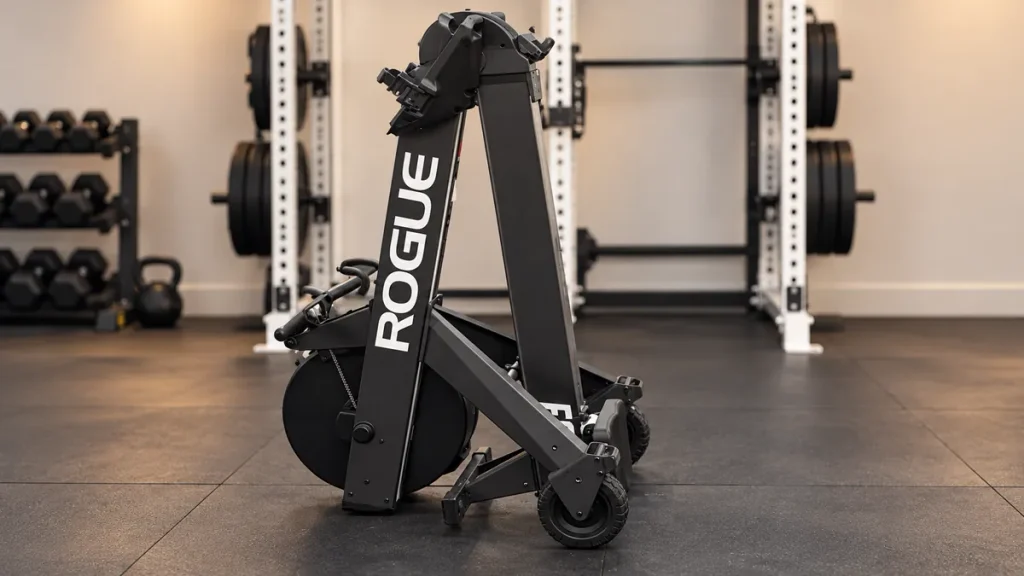
The biggest difference is stability. The Echo feels planted when I row hard. Add quick-release foot straps, an adjustable monitor, a slightly higher seat, and a folding frame that rolls on large turf tires, and there is a lot to like.
It is not perfect. The seat retainer on my unit did not hold as securely as I wanted, and buying secondhand meant I did not receive warranty coverage for that issue. Even so, if I were choosing a new air rower for my garage gym, I would pick the Echo.
Rogue Echo Rower Review — Pros and Cons
Pros
- Feels more stable than the Concept2 rowers I have used during hard efforts.
- Quick-release foot straps make transitions convenient.
- Folding frame helps reclaim space between workouts.
- Large turf tires make the folded machine easy to maneuver.
- Adjustable backlit monitor is easy for me to position and read.
- Custom workout list provides quick access to my regular sessions.
- Slightly higher seat makes getting on and off comfortable for me.
Cons
- Seat retainer on my unit did not hold securely enough during folding.
- Folding release required some effort on my machine.
- Long operating footprint needs a dedicated training area.
- Fan noise increases during hard efforts.
- Specific apps or competitions may require another machine.
- Secondhand purchases do not transfer the original-purchaser warranty.

How I Got My Echo Rower
I found mine on Facebook Marketplace after the previous owner decided rowing was not for them. That gave me an opportunity to pick one up used.
I have owned several Concept2 rowers, including a Model D, so my preference comes from experience with both brands. My secondhand purchase also gave me a useful lesson about warranty coverage, which I will explain below.
Key Features and Specifications
Manufacturer-listed details checked October 19, 2026:
| Specification | Rogue Echo Rower |
|---|---|
| Listed price | $925 before tax |
| Shipping | Free within the contiguous 48 states |
| Resistance | Air flywheel with adjustable damper |
| Frame and rail | Aluminum |
| Machine weight | 72.6 pounds |
| Operating footprint | 99 × 26 inches |
| Folded footprint | 38 × 26 inches |
| Seat height | 16 inches |
| Maximum user weight | 500 pounds |
| Listed maximum inseam | 38 inches |
| Monitor | 4.7-inch backlit LCD |
| Connectivity | Bluetooth and ANT+ |
| Console power | Self-generating with two D-cell backup batteries |
| Wheels | 8.5-inch polyurethane turf tires |
| Warranty | Five-year frame; two-year moving parts and monitor |
Source: Rogue Echo Rower product page. Prices can change. Allow additional room around the machine for rowing and access.
Stability Is the Biggest Reason I Prefer the Echo
The difference I notice most when switching from a Concept2 to the Echo is how stable the Rogue feels.
During my walkthrough, I pointed out its deeper beam and rail structure and broad support legs. Rogue often takes a substantial approach to equipment construction, and on this rower I think it makes sense.
When I increase my effort, I want to focus on driving through each stroke rather than noticing the machine shift underneath me. The Echo gives me that settled feeling.
That does not mean it cannot move. Flooring, technique, and the athlete’s output all matter. My assessment is that it feels more planted than the Concept2 machines I have used.
I suggested in the video that this could help someone sustain a stronger effort. I have not conducted a controlled test proving higher wattage or faster times, so that remains a possibility rather than a measured performance advantage.
Rowing Feel and the Damper
The general format will feel familiar to someone coming from a Concept2: an air flywheel, an adjustable damper, and resistance that responds to your effort.
The damper changes airflow and the feel of accelerating the flywheel. It is not a fixed weight selector that produces the same workload regardless of how you row.
Rogue says third-party testing by S-E-A supported using the Echo’s outputs alongside the Concept2 in competition. That is a manufacturer claim, rather than testing I performed. For a particular event or leaderboard, check the organizer’s accepted machines and submission rules.
Quick-Release Foot Straps Are an Excellent Detail
Once I have the straps adjusted for my shoes, the side lever lets me secure and release my feet without repeatedly loosening and feeding the strap. That is especially useful during circuits where I get on and off between exercises.
There is a setup detail worth understanding: establish the final tension with the buckle closed. If you tighten the strap too much with the lever open, closing it can become difficult.
Multiple users may still need to readjust the fit between sessions. For my own repeated intervals, the quick-release system is convenient.
I also noticed wider straps than on the Concept2 I previously used. I cannot say that alone changes performance, but the release mechanism is something I appreciate every time I transition off the rower.
A Comfortable Seat Height
The Echo’s 16-inch seat sits slightly higher than the standard-height Concept2 models I have used. That extra height makes getting on and off a little nicer for me.
Concept2 currently offers RowErg seat heights of 14 inches with standard legs or 20 inches with tall legs. The Echo falls between them.
It is a personal preference, but one worth considering if a low seat makes entering or leaving a rower awkward.
Folding and Moving the Echo
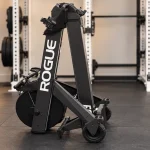
The rail folds toward the front, reducing the space the machine occupies between workouts. Handles provide a convenient place to hold it, and I found the folded rower easy to maneuver on its large tires—even one-handed during my demonstration.
My machine normally stays in one area, so I do not roll it around constantly. Still, the wheels are useful when rearranging the gym or clearing space.
The folding release took some effort on my unit. When unfolding, I release the retaining connection, bring the rail down, and secure the center locking mechanism. Before rowing, I check that everything is properly engaged and remove the seat retainer from the seat’s travel path.
Follow Rogue’s manual for folding and storage. The folded footprint is the storage measurement discussed here; improvised storage positions are not part of this recommendation.
My Main Complaint: The Seat Retainer
The retainer on my unit allowed the seat to slide when I wanted it held in place for folding.
In the video, I showed that I added tape to increase friction. That was my workaround on my own machine, rather than a manufacturer-approved repair recommendation.
It is a small component, but it affects the storage experience. If yours does the same thing, contact Rogue about the correct replacement or adjustment before relying on it to retain the seat.
Monitor Adjustment and Custom Workouts
I like the Echo’s monitor. The backlit screen is easy for me to read, and the arm offers useful positioning, including lowering and turning the display.
I also use the custom workout list. In my video, I showed distance targets including 250, 500, 750, and 1,000 meters, along with a 15-calorie option.
The calorie target fits the way I train: row 15 calories, move to another station, and repeat. Having that workout saved makes it easy to start the next round.
The phone holder is another practical touch. If a specific app matters to your training, verify compatibility rather than assuming the Echo supports everything available for a Concept2 PM5.
Handle Comfort
The handle feels good in my hands, although I did not find a major grip-comfort advantage over the Concept2. Both worked well for me.
What I liked was the open area through the handle. It makes it easy to grab and reposition when putting it away after a workout. Small details like this contribute to the overall ownership experience.
Is It Quieter Than a Concept2?
My impression was that the Echo sounded slightly quieter than my previous Concept2. However, I sold that machine before performing a side-by-side sound test.
I do not have matched decibel readings, so I would not call the Echo definitively quieter. It is still an air rower, and hard efforts create noticeable fan noise.
Buying Used and Warranty Coverage
Buying on Marketplace worked out well overall, but the seat-retainer problem highlighted a tradeoff.
When I contacted Rogue, the replacement was not covered because I had purchased the rower secondhand. Rogue’s published warranty terms specify original-purchaser coverage and say the warranty is nontransferable.
That is different from saying a used machine cannot be serviced. Replacement-part access and free warranty coverage are separate considerations.
Before buying used, inspect the chain, rail, monitor, straps, folding mechanism, and seat retention. Compare the savings with buying new and receiving warranty coverage.
Rogue Echo Rower vs. Concept2: My Choice
Concept2 deserves credit for my experience with its rowers. I owned several, appreciated their serviceability, and found them straightforward to sell when I moved on.
The Echo wins for my garage gym because I prefer its stability, straps, folding design, monitor positioning, and seat height.
The Concept2 price I quoted in the video reflected pricing at that time. Compare current delivered prices when you are ready to order rather than relying on that older figure.
If your gym, preferred app, or competition requires a specific machine, that could outweigh my preference. For my own training, I would choose the Rogue.
| Frequently Asked Questions
How much does the Rogue Echo Rower cost?
Rogue listed it at $925 before tax on October 19, 2026, with free shipping within the contiguous 48 states. Check current pricing before ordering.
How much space does the Echo Rower need?
Its listed footprint is 99 × 26 inches in use and 38 × 26 inches folded. Allow additional room for rowing, access, and folding.
Does the Echo Rower fold?
Yes. I demonstrate the folding mechanism in my video. Follow Rogue's instructions and check that the locking and retaining components are correctly engaged.
Is the Echo more stable than a Concept2?
It feels more stable to me than the Concept2 rowers I have owned, especially during hard efforts. That is my personal assessment, rather than a controlled movement test.
What issue did I have with the seat retainer?
The retainer allowed the seat to slide during folding. I showed my workaround in the video, but recommend contacting Rogue about the correct replacement or adjustment.
Is it quieter than a Concept2?
It sounded slightly quieter to me, but I did not perform a matched sound test. The Echo still produces noticeable fan noise during hard efforts.
Are the quick-release straps useful?
Yes. Once fitted for my shoes, the lever lets me secure and release my feet quickly, which I appreciate during circuits.
Can I save custom workouts?
Yes. I use a custom list with several distance targets and a 15-calorie workout.
Does the warranty transfer to a used buyer?
Rogue's published terms state that the warranty applies to the original purchaser and is nontransferable. My secondhand purchase was not covered for the seat-retainer issue.
Would I buy the Echo again?
Yes. For my garage gym, its stability and everyday convenience make it my preferred choice over the Concept2 machines I have owned.
Final Verdict
The Echo earns my recommendation because of how it feels and functions in my gym. Stability is the headline, but the straps, folding design, monitor adjustment, and seat height all contribute.
The seat-retainer issue deserves attention, and used buyers should understand the warranty limitation. Neither changes my overall opinion: I prefer the Echo to the Concept2 machines I have owned.
Its long-term durability will take time to establish. Based on my experience so far, though, Rogue has built a rower I enjoy using and would happily choose again.