


Suunto Run Review: A Lightweight GPS Running Watch That Gets the Basics Right
MSRP: $249 USD
Best For: Road runners, marathoners, recreational runners, and fitness enthusiasts
Overall Rating: ★★★★½ (4.7/5)
Suunto has built a reputation for producing GPS watches designed for serious endurance athletes. From ultramarathons and mountain adventures to Ironman triathlons, the Finnish company has traditionally focused on rugged outdoor watches packed with advanced navigation and training tools. While those features are fantastic for explorers and trail runners, they’re often more than the average runner actually needs.

That’s where the Suunto Run comes in.
Instead of trying to compete directly with premium multisport watches like the Garmin Forerunner 970, COROS Pace Pro, or even Suunto’s own Race 2, the Suunto Run takes a different approach. It strips away many of the expedition-style features and focuses on what most runners use every single day: accurate GPS, reliable heart-rate tracking, excellent battery life, and a lightweight design that’s comfortable enough to forget you’re wearing.
For many runners, that’s exactly the right formula.
Whether you’re training for your first 5K, chasing a marathon personal best, or simply trying to stay active, the Suunto Run delivers an impressive collection of training features without overwhelming users with unnecessary complexity.
Of course, there’s one question many buyers will inevitably ask:
Should you buy the Suunto Run, or spend the extra money on the Suunto Race 2?
After all, both watches share the same Suunto ecosystem, AMOLED display technology, and extensive sports profiles. The Race 2 adds premium materials, offline mapping, longer battery life, and additional outdoor capabilities—but it also costs considerably more.
Throughout this review, we’ll examine where the Suunto Run excels, where compromises have been made, and which athletes are most likely to benefit from stepping up to the Race 2.
First Impressions
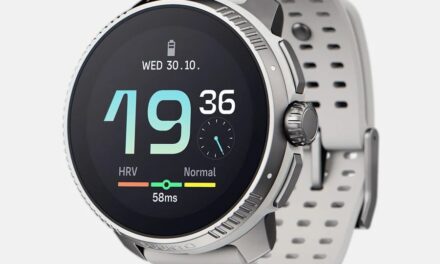
The first thing you’ll notice when picking up the Suunto Run is just how incredibly light it feels.
Coming from larger adventure watches, the difference is immediately noticeable. During everyday wear, it almost disappears on your wrist. That may sound like a minor detail, but anyone who has worn a GPS watch around the clock knows that comfort becomes increasingly important after several days of continuous use.
For runners, a lighter watch offers several advantages:
- Less bounce during faster workouts
- Greater comfort during marathon and ultramarathon distances
- Better sleep tracking because the watch is less noticeable overnight
- Improved comfort for all-day wear at work or around town
Unlike bulky outdoor watches that can catch on jacket sleeves or feel awkward under dress shirts, the Suunto Run is small enough to transition easily from training to everyday life.
The watch also maintains the clean Scandinavian design language that Suunto has become known for. Rather than filling the case with aggressive styling or oversized bezels, Suunto has created a watch that looks modern, understated, and athletic.
It’s a watch that feels equally appropriate on a morning run, at the office, or while grabbing dinner afterward.
Design and Build Quality
The Suunto Run doesn’t attempt to be the most rugged watch Suunto has ever produced.
Instead, it’s designed around efficiency.
The reinforced polymer case helps keep overall weight extremely low while still providing excellent durability for everyday training. Unless you’re frequently climbing rocks, navigating technical mountain terrain, or working in harsh environments, the materials should easily withstand years of normal running and fitness use.
The silicone strap is another highlight.
It’s soft enough to remain comfortable during multi-hour training sessions while providing enough ventilation to prevent excessive sweat buildup. During long summer runs, this becomes increasingly important, particularly compared to thicker straps found on some outdoor watches.
Button placement is intuitive, allowing workouts to be started or paused even while wearing gloves or during rainy conditions. Although the touchscreen is responsive, physical buttons remain essential for runners because sweaty fingers and rain can interfere with touch controls.
Overall, the watch feels thoughtfully designed rather than over-engineered.
Everything has a purpose.
Nothing feels excessive.
Color Options
Suunto offers the Run in several modern color choices that allow runners to match their personality without becoming overly flashy.
Current color options include:
- All Black
- Frost Gray
- Lime
- Coral Orange
Did I say Flashy? Why yes I did. We decided upon the “Coral Orange” and it definitely stands out. You are not trying to hide it with this color option.
The black version will likely appeal to athletes looking for a watch that transitions easily into everyday wear, while the brighter colors add personality for runners who prefer more vibrant gear.
One advantage of Suunto’s design is that all colors maintain the same clean aesthetic. Even the brighter options look refined rather than gimmicky.
If you’re planning to wear the watch seven days a week, the black or gray models are probably the safest choices. If this is primarily a dedicated running watch, the brighter colors can make it easier to spot during workouts and add a bit of fun to your gear collection.
Comfort: One of the Biggest Reasons to Buy the Suunto Run
Comfort may ultimately become the Suunto Run’s greatest selling point.
Many GPS watches continue to grow larger every year as manufacturers add additional sensors, batteries, and mapping capabilities. While these additions are useful, they also increase size and weight.
The Suunto Run moves in the opposite direction.
Its lightweight construction makes it particularly attractive for:
- Daily runners
- Marathon training
- Track workouts
- Tempo runs
- Interval sessions
- Recreational athletes who wear their watch all day
The reduced weight also minimizes wrist movement during harder efforts, something experienced runners often notice during fast interval sessions.
If you’ve ever found yourself removing your GPS watch immediately after finishing a run because it felt bulky or uncomfortable, the Suunto Run largely solves that problem.
It simply disappears on your wrist.
And for a running watch, that’s one of the highest compliments you can give.
Build Quality Compared to the Suunto Race 2
This is where buyers need to understand the philosophy behind both watches.
The Suunto Run prioritizes lightweight performance.
The Suunto Race 2 prioritizes premium construction and outdoor durability.
The Race 2 offers upgraded materials, including a stainless steel or titanium case (depending on the model), sapphire crystal on select versions, larger onboard storage, offline topographic maps, and additional navigation features geared toward mountain athletes and adventure racers.
The Suunto Run intentionally skips many of those premium features to reduce weight and lower the overall price.
Neither approach is wrong.
They simply target different types of athletes.
If most of your workouts take place on roads, bike paths, or local trails, you’ll likely appreciate the lighter design of the Suunto Run.
If your weekends involve mountain ultras, backpacking trips, or multi-day adventures where navigation and maximum battery life become essential, the Race 2 begins to justify its higher price.
In the next section, we’ll dive into the display, user interface, and everyday usability to see how the Suunto Run performs once you actually begin training.
Display, User Interface, and Everyday Performance
The Suunto Run may be positioned as Suunto’s entry-level running watch, but the display certainly doesn’t feel entry level. One of the first things you’ll notice after powering on the watch is the vibrant AMOLED screen. Colors are rich, blacks are deep, and the display is exceptionally easy to read whether you’re standing in bright afternoon sunlight or heading out before sunrise.
For runners, readability matters. During a hard interval workout or marathon race, you don’t want to squint at tiny numbers while trying to maintain your pace. Suunto has done an excellent job balancing aesthetics with practicality. The default watch faces are clean, the fonts are large enough to read at a glance, and the customizable data screens allow runners to prioritize the metrics that matter most.
The touchscreen is responsive and smooth, but perhaps more importantly, Suunto continues to include physical buttons. While touchscreens have improved dramatically over the past few years, they can still become frustrating when your hands are sweaty, you’re wearing gloves, or it’s raining. Physical buttons ensure that starting, stopping, and scrolling through workouts remains reliable under virtually every condition.
The overall user interface is intuitive, particularly for anyone already familiar with Suunto watches. Menus are logically organized, animations are fluid, and navigating between widgets rarely requires more than a few button presses. New users should have little trouble becoming comfortable with the system after only a few days of use.
GPS Accuracy
GPS performance has become one of the biggest differentiators among modern running watches. Fortunately, Suunto has built an excellent reputation in this area, and the Suunto Run continues that tradition.
Whether you’re running through city streets, suburban neighborhoods, or tree-covered parks, the watch consistently delivers accurate distance measurements and pace data. Instant pace tends to be smooth rather than erratic, making it easier to settle into goal marathon pace or maintain consistent effort during tempo workouts.
For interval training, GPS lock is acquired quickly before the workout begins, minimizing the amount of standing around waiting for satellites. Once connected, tracking remains dependable throughout the session.
During longer runs, GPS tracks remain clean without excessive wandering or cutting corners, something that has plagued lower-end running watches for years. Even on routes with sharp turns or moderate tree cover, the Suunto Run does a respectable job following the actual path traveled.
For the overwhelming majority of road runners, accuracy should be more than sufficient for daily training and racing.
Optical Heart Rate Performance
Optical heart-rate sensors have improved significantly over the past several years, and Suunto’s latest generation continues that trend.
For steady aerobic efforts, recovery runs, and long Zone 2 sessions, heart-rate readings are generally consistent and closely follow chest-strap measurements. This is where most runners spend the majority of their weekly mileage, making reliable wrist-based heart-rate monitoring an important feature.
As with virtually every optical sensor currently on the market, there can be a slight delay during very high-intensity interval workouts where heart rate rises rapidly. Sprint repeats, hill intervals, and track sessions may still benefit from pairing the watch with a chest strap if maximum accuracy is required.
Fortunately, Suunto supports external Bluetooth heart-rate monitors, giving competitive athletes the flexibility to use whichever method best suits their training.
For everyday runners, however, the built-in sensor performs well enough that many users may never feel the need for an external monitor.
Battery Life
Battery life remains one of Suunto’s strongest selling points.
Many AMOLED watches sacrifice endurance in exchange for brighter displays, but the Suunto Run manages to strike an excellent balance between visual quality and efficiency.
For runners training four to six days per week, charging quickly becomes an afterthought rather than a daily routine. Even athletes preparing for marathons should comfortably complete an entire week of training before needing to recharge, depending on GPS settings and display preferences.
Long battery life becomes particularly valuable during:
- Marathon training blocks
- Weekend long runs
- Travel
- Multi-day races
- Vacation workouts
No one enjoys discovering their watch battery is nearly empty just before heading out for an important workout. The Suunto Run minimizes those interruptions.
Training Features
Although marketed primarily toward runners, the Suunto Run includes a surprisingly robust collection of training tools.
Workout tracking includes detailed metrics such as:
- Pace
- Distance
- Heart rate
- Cadence
- Elevation
- Calories
- Lap information
- Recovery time
Beyond basic workout recording, the watch also provides valuable training insights that help runners understand not only how hard they’re training but how well they’re recovering.
Sleep tracking, recovery recommendations, and daily activity monitoring work together to provide a broader picture of overall fitness. Rather than simply logging miles, the Suunto ecosystem encourages smarter training decisions by helping athletes avoid excessive fatigue while maintaining consistent progress.
For runners following structured training plans, this additional context can prove extremely valuable over months of consistent use.
Suunto App Integration
One of Suunto’s greatest strengths isn’t actually the watch—it’s the companion app.
The Suunto App has evolved into one of the cleaner training platforms available today. Syncing workouts is fast, activity summaries are easy to understand, and long-term progress can be reviewed without feeling overwhelmed by unnecessary charts and graphs.
Workout maps display GPS routes clearly, pace and heart-rate graphs are detailed, and weekly training volume is presented in a format that’s easy to interpret.
Athletes who enjoy sharing workouts can also sync activities with popular third-party platforms such as Strava, TrainingPeaks, and other fitness ecosystems.
For runners already invested in one of those platforms, the integration works seamlessly.
Suunto Run vs. Suunto Race 2: Which One Should You Buy?
This is ultimately the biggest question facing potential buyers.
At first glance, the watches appear remarkably similar. Both feature beautiful AMOLED displays, excellent GPS accuracy, Suunto’s mature software ecosystem, and support for dozens of sport profiles.
The differences begin to emerge once you look beyond the basics.
The Suunto Run was designed to deliver outstanding value. It emphasizes comfort, simplicity, and everyday running performance. It’s lighter on the wrist, less expensive, and focuses almost exclusively on the features that most runners actually use every day.
The Suunto Race 2, on the other hand, is built for athletes who regularly venture beyond paved roads. It introduces offline maps, more advanced navigation capabilities, premium construction materials, larger storage capacity, and significantly longer battery life for extended adventures.
If your training primarily consists of road running, treadmill sessions, local races, and the occasional half marathon or marathon, the Suunto Run is likely the smarter purchase. You’ll save money, reduce wrist weight, and still receive nearly every feature necessary for effective training.
However, if you’re preparing for mountain ultras, multi-day trail races, adventure racing, hiking, or backcountry exploration, the Race 2 quickly begins to justify its higher price. Offline navigation alone can be invaluable when you’re hours from the nearest road.
Neither watch is objectively better.
Instead, they represent two different philosophies.
The Suunto Run focuses on efficiency.
The Race 2 focuses on capability.
Understanding which category best matches your training will ultimately determine which watch delivers the greater value.
Navigation, Smart Features, and Complete Specifications
While the Suunto Run is marketed primarily as a running watch, it includes enough smartwatch functionality to satisfy most athletes without becoming overloaded with features. Rather than trying to replace your smartphone, it focuses on providing the information you actually need while training and throughout the day.
Navigation Features
One of the most significant differences between the Suunto Run and the Suunto Race 2 is navigation.
The Suunto Run offers route guidance and breadcrumb navigation, allowing runners to follow a planned course with confidence. If you’re training on familiar roads or local trails, this is often all that’s required. Breadcrumb navigation is lightweight, easy to follow, and consumes less battery than full-color mapping.
For many runners, that’s enough.
If you’re traveling for a race, exploring a new city, or following a marathon course you’ve downloaded beforehand, the navigation performs well without adding unnecessary complexity.
However, this is where the Race 2 begins to separate itself.
The Race 2 includes full offline maps, allowing runners and hikers to view surrounding terrain, trail intersections, roads, and points of interest directly on the watch. If you frequently trail run in unfamiliar mountains or spend weekends hiking national parks, those maps can be incredibly valuable.
Imagine running twenty miles into the mountains and reaching an unexpected trail intersection. With the Suunto Run, you’ll follow your breadcrumb trail. With the Race 2, you’ll actually see the surrounding trail network.
For adventure athletes, that’s a meaningful advantage.
For someone training around their neighborhood or local greenway, it probably isn’t.
Smart Features
The Suunto Run keeps smart features intentionally simple.
You’ll receive notifications for incoming calls, text messages, calendar reminders, and supported smartphone apps. The notifications are clear and easy to read thanks to the AMOLED display, making it convenient to glance at your wrist during meetings or workouts without pulling out your phone.
Music controls are also available, allowing users to pause, skip tracks, or adjust volume while listening through their smartphone.
Unlike some premium smartwatches, however, the Suunto Run does not attempt to become an entertainment device. There are no third-party app stores, mobile payment systems, or onboard music storage competing for battery life and processing power.
Some buyers may view this as a limitation.
Others will appreciate the cleaner experience.
One reason many runners choose Suunto is because the company has resisted turning its watches into miniature smartphones. Instead, they remain focused on training, recovery, and outdoor performance.
Recovery and Wellness Tracking
Training is only half the equation.
Recovery determines how well your body adapts to the work you’ve completed.
The Suunto Run includes a variety of wellness metrics designed to help athletes better understand their overall fitness rather than simply accumulating mileage.
Daily activity tracking monitors movement throughout the day, encouraging users to stay active even outside scheduled workouts.
Sleep tracking provides insight into nightly recovery, while heart-rate monitoring helps establish trends over time. Combined with workout history and recovery recommendations, these tools give runners a more complete understanding of when to push harder and when additional recovery may be beneficial.
Experienced runners know that improvement doesn’t happen during the workout itself.
It happens afterward.
The more consistently you recover, the more consistently you’ll improve.
Multi-Sport Support
Although its name suggests a watch built exclusively for runners, the Suunto Run supports a wide variety of activities.
In addition to road running, users can track:
- Trail Running
- Walking
- Hiking
- Cycling
- Indoor Cycling
- Swimming
- Strength Training
- Yoga
- Rowing
- Elliptical
- Treadmill Running
- Interval Training
- HIIT Workouts
- Indoor Fitness
- Numerous additional sport profiles
This flexibility makes the watch attractive for runners who occasionally cross-train.
Cyclists, gym users, and recreational athletes won’t need separate devices for different activities.
However, if you’re a dedicated triathlete or spend considerable time in the mountains, the additional navigation and endurance features of the Race 2 may still justify the higher investment.
Complete Specifications Comparison
| Feature | Suunto Run | Suunto Race 2 |
|---|---|---|
| Display | AMOLED | AMOLED |
| Touchscreen | Yes | Yes |
| Case Material | Reinforced Polymer | Stainless Steel or Titanium |
| Glass | Gorilla Glass | Sapphire (selected models) |
| Weight | Approximately 36 g | Approximately 76 g (Steel) |
| Navigation | Breadcrumb Routes | Full Offline Maps + Breadcrumb Navigation |
| GPS | Dual-band GNSS | Dual-band GNSS |
| Optical Heart Rate | Yes | Yes |
| Sleep Tracking | Yes | Yes |
| Recovery Metrics | Yes | Yes |
| Smart Notifications | Yes | Yes |
| Music Controls | Yes | Yes |
| Waterproof Rating | 5 ATM | 5 ATM |
| Sport Modes | 90+ | 95+ |
| Battery Life | Excellent for daily training | Longer overall endurance |
| Target User | Road runners & fitness athletes | Trail runners, ultrarunners & outdoor adventurers |
Who Should Buy the Suunto Run?
The Suunto Run makes the most sense for athletes who value simplicity, comfort, and performance.
It’s particularly well suited for:
- First-time GPS watch buyers
- Recreational runners
- Half marathon runners
- Marathon runners
- Daily trainers
- Gym users
- Fitness enthusiasts
- Anyone wanting a lightweight watch for all-day wear
If your training takes place primarily on roads, paved paths, or local parks, the Suunto Run offers nearly everything you’ll need without paying for features you may never use.
Its lower weight alone will likely appeal to runners logging high weekly mileage.
After several hours on your wrist, you’ll appreciate how little you notice it’s there.
Who Should Spend More on the Suunto Race 2?
The Race 2 is built for athletes who regularly push beyond traditional road running.
It’s an excellent choice for:
- Trail runners
- Ultrarunners
- Adventure racers
- Mountain hikers
- Backpackers
- Orienteering enthusiasts
- Athletes who depend on offline maps
- Users wanting premium construction materials
If your adventures routinely take you miles from civilization, offline maps and extended battery life become far more than luxury features.
They become valuable safety tools.
Likewise, athletes planning 100-mile ultramarathons or multi-day adventures will appreciate the Race 2’s additional endurance.
For everyone else, however, those premium capabilities may never be fully utilized.
The Suunto Run remains the more practical—and economical—choice.
Pros and Cons
Pros
- Extremely lightweight and comfortable for all-day wear
- Bright, vibrant AMOLED display that’s easy to read in sunlight
- Excellent GPS accuracy for road and trail running
- Reliable optical heart-rate sensor for everyday training
- Outstanding battery life for a lightweight running watch
- Simple, intuitive user interface
- Strong integration with the Suunto App
- Supports numerous sport profiles beyond running
- Competitive price compared to many premium GPS watches
Cons
- No full offline maps like the Suunto Race 2
- Polymer case doesn’t feel as premium as titanium or stainless steel
- No sapphire crystal option
- Limited smartwatch features compared to Apple or Garmin
- Serious mountain athletes may outgrow its navigation capabilities
Final Verdict
The Suunto Run succeeds because it understands its audience.
Rather than trying to become an all-in-one adventure watch packed with features many runners rarely use, Suunto focused on building an exceptional running watch. The result is a device that’s lightweight, comfortable, accurate, and remarkably easy to live with every day.
For runners, those qualities matter far more than having dozens of features buried deep inside complicated menus.
The AMOLED display is beautiful without sacrificing usability. GPS performance is consistently reliable. Battery life is strong enough that charging quickly becomes an afterthought. Most importantly, the watch virtually disappears on your wrist—a characteristic that becomes increasingly valuable during marathon training and long-distance racing.
If your primary activities involve road running, treadmill workouts, local races, or general fitness, it’s difficult to justify spending significantly more for features you may rarely use. The Suunto Run delivers nearly everything the average runner wants while keeping both weight and price impressively low.
That doesn’t mean the Suunto Race 2 isn’t worth considering.
If your weekends are spent exploring mountain trails, navigating unfamiliar backcountry routes, or competing in ultramarathons where offline mapping and maximum battery life become essential, the Race 2 remains the better tool. Its premium materials, full-color offline maps, and extended endurance make it one of the strongest outdoor sports watches currently available.
For everyone else, however, the Suunto Run hits an impressive sweet spot.
It offers enough performance to satisfy experienced runners while remaining approachable for newcomers entering the GPS watch market.
Suunto Run vs. Suunto Race 2: Which Would I Buy?
If I were training primarily for:
- 5Ks
- 10Ks
- Half marathons
- Marathons
- General fitness
- Daily running
I’d choose the Suunto Run.
The lower weight alone makes it a joy to wear during everyday training, and I don’t think most runners would miss the additional outdoor features offered by the Race 2.
However, if I were preparing for:
- 50K or 100-mile ultramarathons
- Mountain races
- Backpacking trips
- Adventure racing
- Long-distance hiking
I’d spend the extra money on the Suunto Race 2.
The offline maps, premium construction, and longer battery life become genuine advantages in those environments.
Overall Rating
| Category | Rating |
|---|---|
| Design | ★★★★★ |
| Comfort | ★★★★★ |
| Display | ★★★★★ |
| GPS Accuracy | ★★★★☆ |
| Heart Rate Accuracy | ★★★★☆ |
| Battery Life | ★★★★★ |
| Smart Features | ★★★★☆ |
| Value | ★★★★★ |
Overall Score: 4.8 / 5
Is the Suunto Run Worth It?
Absolutely.
The Suunto Run isn’t trying to be the most feature-packed sports watch on the market. Instead, it focuses on delivering the features runners use most while eliminating unnecessary weight, complexity, and cost.
For most runners, that’s exactly the right approach.
If you’re looking for a lightweight GPS running watch with excellent battery life, a beautiful AMOLED display, dependable GPS accuracy, and one of the best training ecosystems available today, the Suunto Run deserves a place near the top of your shortlist.
For athletes who need premium outdoor navigation and expedition-level durability, the Suunto Race 2 remains the better choice. But for everyone else, the Suunto Run may be the better value—and perhaps the better running watch.