


REP x PÉPIN Adjustable Dumbbell Review: Worth the Price?
REP x PÉPIN FAST Series Adjustable Dumbbell Review: The Canadian Design That REP Took Mainstream
The adjustable-dumbbell market has traditionally forced buyers to choose between speed, durability, weight capacity, and the feel of a conventional dumbbell. Selectorized models can change weight quickly, but many rely on plastic parts and stop at 50 or 80 pounds. Heavy-duty plate-loaded models can go much heavier, but changing plates between exercises or during drop sets can become a workout of its own.
Rep Fitness PÉPIN
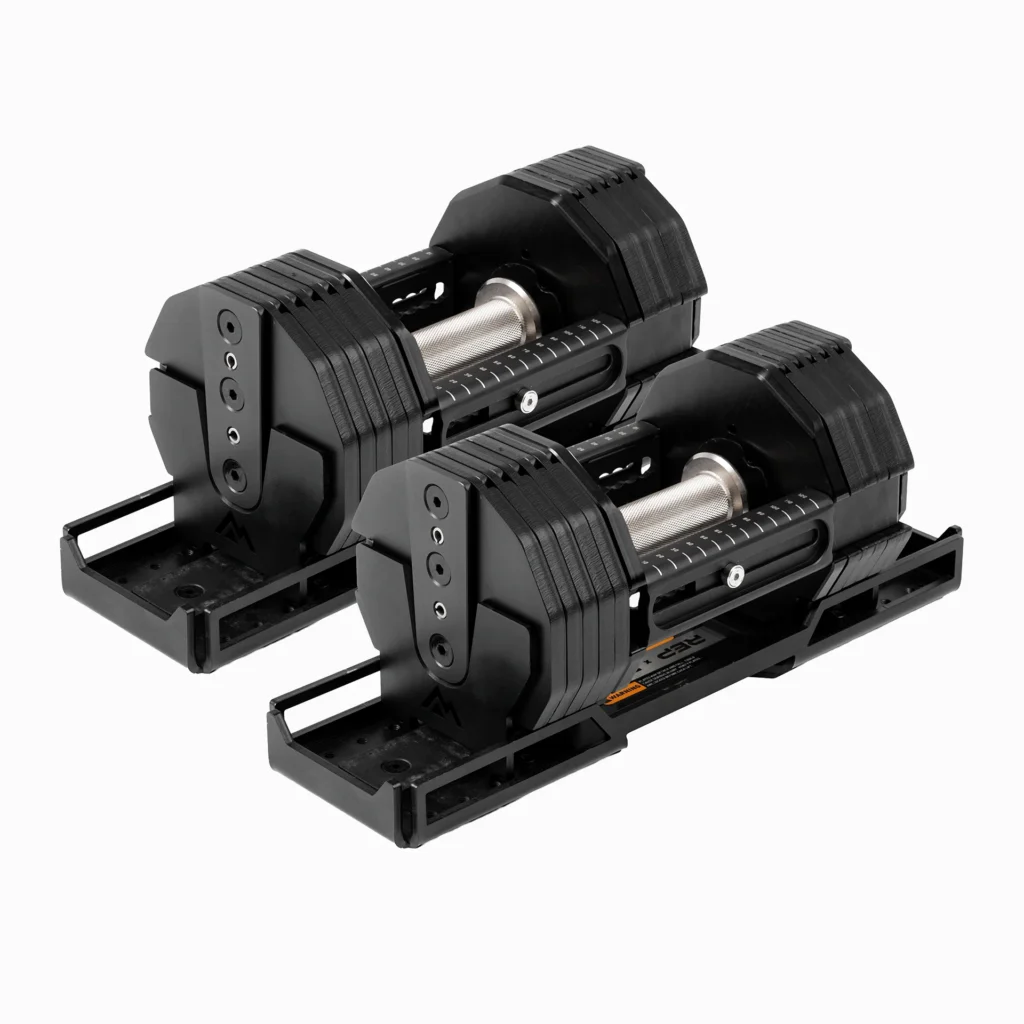
The REP x PÉPIN FAST Series Adjustable Dumbbell attempts to eliminate that compromise. It combines an all-metal construction, a fast magnetic pop-pin adjustment system, expandable weight capacity, and a relatively compact shape that feels much closer to a traditional pro-style dumbbell. Depending on the package, a pair can replace an entire run of fixed dumbbells while reaching as high as 125 pounds per hand.
The design did not originate inside REP Fitness, however. Its story began in Canada with Pépin, an independent equipment inventor who created and handmade the original PÉPIN FAST Series. REP later partnered with Pépin through its Inventor Series to refine the design and make it practical to manufacture at a much larger scale.
That history matters because this is not simply a REP dumbbell with another company’s name added to it. It is an independent Canadian idea that REP helped turn into a polished, widely available product.
REP x PÉPIN FAST Series Overview
| Feature | REP x PÉPIN FAST Series |
|---|---|
| Starting weight | 10 pounds per dumbbell |
| Maximum weight | Up to 125 pounds per dumbbell |
| Available pairs | 65, 85, 105, and 125 pounds |
| Main adjustment | Magnetic pop-pins |
| Standard adjustment jump | 10 pounds |
| Micro-adjustment plates | Two 2.5-pound plates per dumbbell |
| Maximum length | Approximately 18.3 inches |
| Handle diameter | 34 millimeters |
| Handle finish | Nickel plated |
| Grip | Volcano-style knurling |
| Plates | CNC-cut steel with black powder coat |
| Cradle | Steel with UHMW protective liners |
| Expandable | Yes, up to 125 pounds |
| Warranty | Lifetime against defects; exclusions apply |
| Starting price at time of review | $899.99 per pair |
The History: Did REP Invent or Buy PÉPIN?
The short answer is neither.
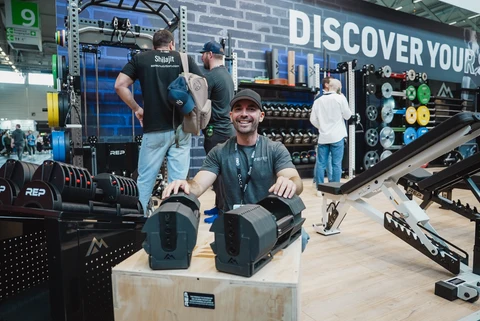
The original FAST Series was developed by a Canada-based inventor named Pépin. The original dumbbells were handmade in relatively small quantities before REP became involved. REP says it encountered Pépin’s work and brought the product into its Inventor Series, a program intended to help independent equipment designers improve and distribute their inventions.
David Pépin
REP’s Colorado engineering team worked directly with Pépin to take the original handmade design and make it manufacturable at scale without giving up the qualities that made it appealing. REP describes the current product as a partnership rather than an acquisition, and the product continues to carry both names.
There is no public indication that REP bought Pépin’s company outright. A more accurate description is that Pépin created the concept in Canada, and REP partnered with him to engineer, manufacture, distribute, and support the commercial version.
How REP changed the original PÉPIN FAST Series
The REP version is not identical to the original handmade dumbbell. Among the changes:
- The minimum weight dropped from 20 pounds to 10 pounds.
- High-strength aluminum was incorporated into the handle headplates to reduce the starting weight.
- The side rails received a Cerakote finish.
- High-contrast laser-etched weight markings improved visibility.
- The cradle became expandable so buyers can add capacity later without replacing it.
- REP refined less-visible tolerances and manufacturing details to make larger-scale production possible.
Because of those changes, components from the original PÉPIN FAST Series are not compatible with the REP x PÉPIN version.
Design and Build Quality
The first thing that separates the REP x PÉPIN from many selectorized dumbbells is the amount of metal in the system. The weight plates are CNC-cut steel, the adjustment mechanism uses a substantial steel selector bar, and the cradle is steel rather than molded plastic. UHMW liners are placed at contact points to prevent unnecessary steel-on-steel wear.
That construction gives the dumbbells a much more serious, premium feel than products built around plastic dials, gears, or internal selector components. It also makes the mechanism easier to understand. Rather than trusting a small hidden gear to retain the plates, you can see the thick selector rod passing through the chosen weight position.
The heads have a pro-style shape with flat bottoms. They look and feel more like conventional dumbbells than many block-shaped adjustable systems, while the flat base prevents them from rolling across the floor.
The 34-millimeter nickel-plated handles use a volcano-style knurl. The diameter is thicker than a typical barbell shaft but appropriate for a heavy dumbbell. The knurling offers a secure grip without feeling excessively sharp during high-repetition curls, presses, or rows.
How the Adjustment System Works
Each side of the dumbbell uses a magnetic pop-pin connected to the selector rail. Press the pin outward, slide it to the desired weight marking, and press it back into place until it clicks. The selected plates lift with the handle while the remaining plates stay in the cradle.
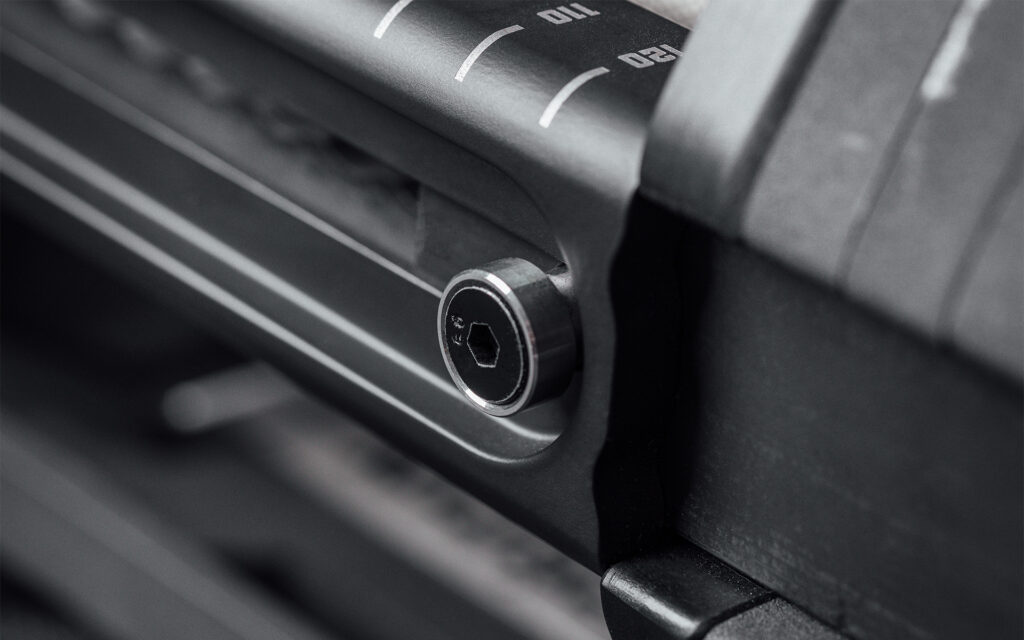
The main system changes the total dumbbell weight in 10-pound increments. Weight changes are fast and can even be made with the dumbbell outside the cradle, which is valuable during drop sets. You still need to place the dumbbell flat on a stable surface before moving the selectors.
For smaller jumps, each dumbbell includes two 2.5-pound micro-plates that fit inside the handle area. Adding both gives you a balanced 5-pound increase. Using only one creates a 2.5-pound jump but introduces a slight imbalance. Because the micro-plate sits close to the center of gravity, that imbalance is less noticeable than it would be with extra weight added to the end of one head.
The magnetic pins are fast and satisfying to operate, but the user must confirm that each pin is fully seated. REP says the selector ring should contact the housing and no part of the pin shaft should remain visible. A partially engaged selector could allow a plate to come loose.
Compact Size and Heavy Weight Capacity
One of the best features is the combination of compact dimensions and high capacity. The dumbbells reach 125 pounds at approximately 18.3 inches long. That is close to the length of many lighter adjustable dumbbells and significantly more compact than some heavy plate-loaded alternatives.
Just as importantly, the dumbbell does not remain at its maximum length when using lighter weights. Only the selected plates leave the cradle, so the working dumbbell becomes shorter as weight is reduced. This makes curls, lateral raises, presses, and other movements feel more natural than systems with a permanently long handle or exposed loading screws.
A 125-pound pair can replace 23 pairs of fixed dumbbells covering weights from 10 through 125 pounds. That represents an enormous space savings for a garage gym, even after accounting for the cradle or optional stand.
Choosing Between 65, 85, 105, and 125 Pounds
The best configuration depends on your strength level and budget.
65-pound pair
The 65-pound set is the lowest-cost entry point and should cover most isolation exercises, lighter pressing, and general fitness training. Stronger lifters may outgrow it quickly on rows, bench presses, and lower-body exercises.
85-pound pair
For many home-gym owners, 85 pounds is the sweet spot. It provides enough room for meaningful strength progression while keeping the initial cost and cradle size lower. Because the system is expandable, you can add plates later rather than replacing the entire set.
105-pound pair
The 105-pound version makes sense for advanced lifters who regularly press or row beyond the capacity of typical adjustable dumbbells but do not expect to need the full 125 pounds immediately.
125-pound pair
The 125-pound version is designed for serious strength athletes, bodybuilders, and anyone who wants the maximum capacity from day one. It is expensive and extremely heavy as a complete system, but few quick-adjust dumbbells offer comparable capacity in such a compact form.
Expandability Is a Major Advantage
Many adjustable dumbbell systems force buyers to select a maximum weight at purchase. If that capacity becomes limiting, the only solution may be to buy another pair.
The REP x PÉPIN system allows the lower-capacity versions to be expanded up to 125 pounds by adding compatible plates. The steel cradle also expands: the end sections can be unscrewed and moved to pre-drilled positions that match the new capacity.
This makes the 65- or 85-pound versions easier to justify for someone who wants to spread the expense over time. You are buying into one system rather than purchasing a temporary set that will eventually need to be replaced.
Durability and Dropping
REP extensively drop-tested the dumbbells from multiple angles, including more demanding edge drops. That distinguishes them from adjustable dumbbells that are tested only with controlled, flat drops.
However, “drop-tested” does not mean “indestructible.” REP says occasional drops should not be a problem, but repeated or abusive dropping is excluded from the warranty. Even fixed pro-style dumbbells can eventually be damaged when continually thrown from shoulder height.
These should survive normal home-gym use and the occasional failed rep better than most plastic-heavy adjustable dumbbells. I still would not treat them like rubber hex dumbbells. When possible, control them to the floor and avoid dropping directly onto a corner or selector mechanism.
Cradles and Storage
The metal cradles are another strong part of the design. Plastic trays can crack or flex when users return a heavy adjustable dumbbell at an angle. These steel cradles feel more appropriate for a system that can hold 125 pounds per hand, while UHMW liners protect the finish and guide the plates into position.
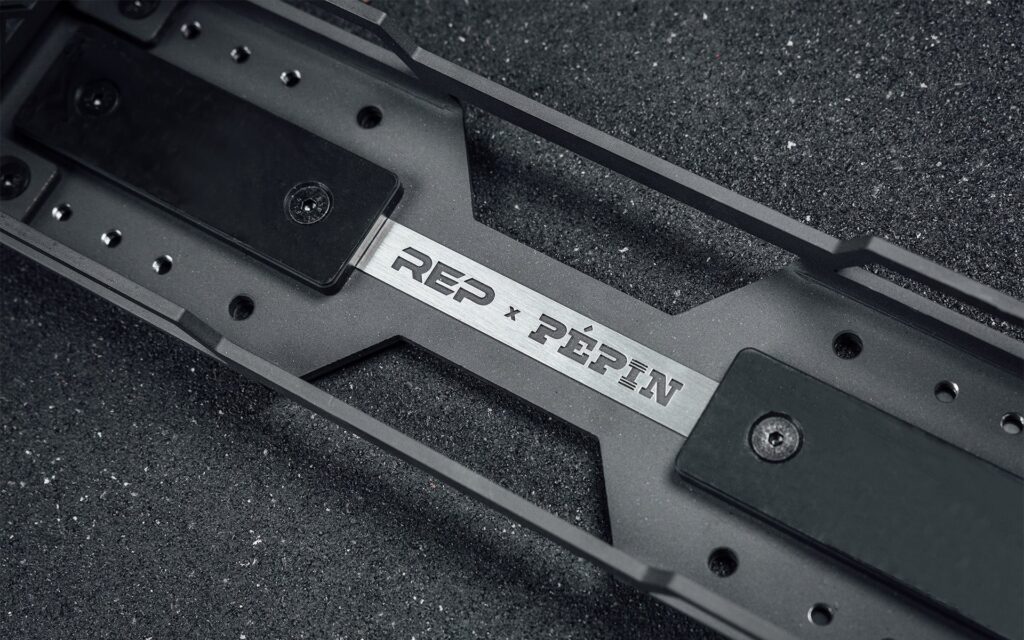
The dumbbells and cradles must be stored and operated on a flat, level surface. REP warns that angled trays or incompatible racks may affect stability and adjustment. REP offers a dedicated adjustable dumbbell stand and a storage cart, but both add significantly to the total price.
The stand improves usability because repeatedly picking 85 to 125 pounds up from floor level can become awkward. Buyers should consider storage part of the total system cost rather than an afterthought.
How They Feel During Training
The compact head design and traditional shape are major advantages during actual exercises. The dumbbells do not feel like large plastic blocks, and the handle is not trapped inside a restrictive cage. The flat-bottom heads can rest comfortably on the thighs before a press and do not roll away between sets.
There may be some movement and noise between plates; no adjustable dumbbell with removable plates will feel completely identical to a welded fixed dumbbell. REP’s tight tolerances keep the movement relatively controlled, but anyone expecting absolute silence should choose a fixed dumbbell set.
The 34-millimeter handle will appeal to lifters who like a substantial grip. People with smaller hands may initially find it thick, particularly during curls or high-repetition movements, but the handle diameter also matches the heavy-duty personality of the system.
REP x PÉPIN vs. REP QuickDraw
REP’s QuickDraw is the more affordable option for lifters who need no more than 60 pounds per hand. It starts lighter, changes weight quickly with Lock-N-Load switches, and uses steel with reinforced nylon-composite components.
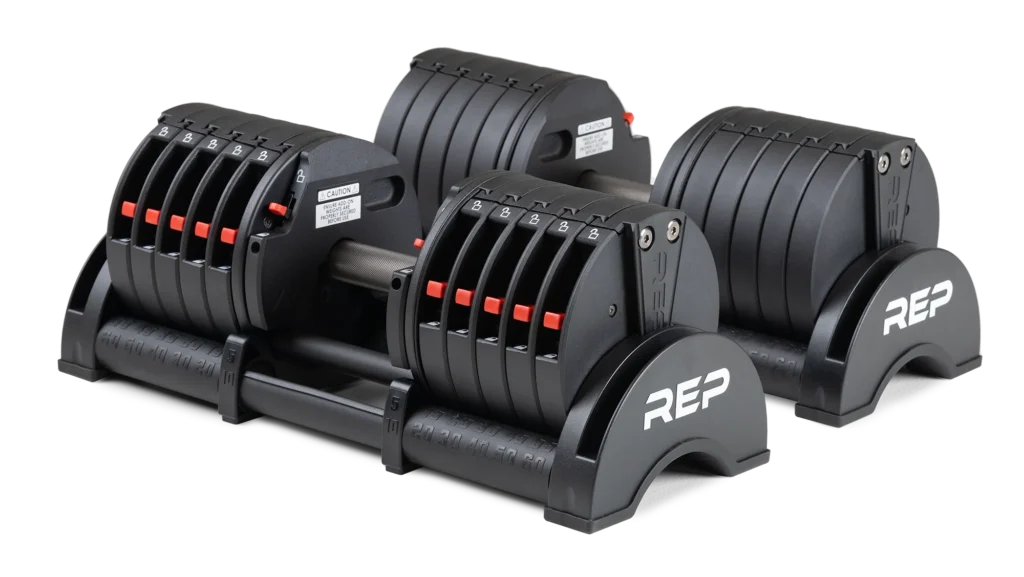
Rep Fitness QuickDraw
The REP x PÉPIN is the premium choice for heavier training. It reaches 125 pounds, uses an all-metal dumbbell and cradle construction, employs magnetic steel selector rods, and feels closer to a traditional pro-style dumbbell. The PÉPIN costs considerably more, but it serves a different buyer.
Choose the QuickDraw for general fitness, lighter strength training, and better value. Choose the REP x PÉPIN if high weight capacity, metal construction, compact size, and long-term expandability are priorities.
What I Like
- Canadian inventor origin: REP gives Pépin credit rather than presenting the concept as its own.
- All-metal construction: The dumbbells and cradles avoid the fragile plastic mechanisms common in this category.
- Fast magnetic selectors: Moving between exercises or setting up drop sets takes very little time.
- Heavy capacity: A maximum of 125 pounds per hand covers serious strength and bodybuilding work.
- Compact design: Even at maximum capacity, each dumbbell is only about 18.3 inches long.
- Expandable system: Lower-capacity sets can grow with the lifter.
- Traditional feel: Pro-style heads, a knurled handle, and a flat bottom make them comfortable for familiar exercises.
- Durable cradle: Steel construction is better suited to reracking very heavy dumbbells.
- Lifetime defect warranty: Strong coverage, although normal wear and damage caused by repeated dropping are excluded.
What Could Be Better
- Premium price: The base pair starts around $899.99, and heavier configurations cost considerably more.
- Stand sold separately: A stand or storage cart adds hundreds of dollars to the complete setup.
- Micro-adjustments require loose plates: Adding or removing the 2.5-pound plates is slower than moving the main selectors.
- A single micro-plate creates imbalance: A 2.5-pound jump is possible, but balanced changes occur in 5-pound increments.
- Flat storage required: Angled dumbbell trays or improvised stands may affect operation.
- Not compatible with original PÉPIN components: Owners of the handmade Canadian version cannot combine their old handles or plates with the REP system.
- Too much dumbbell for some users: Lifters who never exceed 50 or 60 pounds may get better value from the QuickDraw or another lighter system.
Who Should Buy the REP x PÉPIN FAST Series?
These dumbbells are best suited to:
- advanced home-gym lifters who need more than 80 pounds per hand;
- bodybuilders who frequently use drop sets and want fast adjustments;
- garage-gym owners who cannot dedicate an entire wall to fixed dumbbells;
- buyers who prioritize metal construction and repairable, visible mechanics;
- lifters who want to buy a lower capacity now and expand later; and
- anyone who wants an adjustable dumbbell that feels close to a conventional pro-style dumbbell.
They are harder to justify for beginners, casual users, or anyone whose training rarely requires more than 50 or 60 pounds. Those buyers can get most of the space-saving benefit from a less expensive system.
Final Verdict
The REP x PÉPIN FAST Series Adjustable Dumbbells are among the most complete heavy adjustable dumbbells available. They combine fast weight changes, an all-metal mechanism, a compact profile, and a maximum capacity that can replace an enormous fixed-dumbbell collection.
The backstory makes the product more interesting. This was not originally a REP invention. Pépin created and handmade the FAST Series in Canada, then partnered with REP to make the design easier to produce and available to a much wider audience. REP improved the starting weight, markings, coatings, cradle, and manufacturability while continuing to credit the original inventor.
The high price will be the deciding factor for most buyers. Once a heavier configuration and stand are included, this becomes a major home-gym investment. But for advanced lifters who genuinely need 85 to 125 pounds per hand, the cost should be compared with a full fixed-dumbbell run, not just with a pair of 50-pound selectorized dumbbells.
If you want one compact system that changes quickly, handles serious weight, and avoids relying on delicate plastic internals, the REP x PÉPIN FAST Series belongs near the top of the list.
GearMashers rating: 9.5/10
Best for: Advanced home-gym lifters who want the speed of a selectorized dumbbell with the capacity and construction of premium fixed weights.
Buy the REP x PÉPIN FAST Series: Check current pricing and available sizes at REP Fitness
Frequently Asked Questions
Did REP Fitness invent the PÉPIN dumbbell?
No. The original FAST Series was created and handmade by Pépin, a Canada-based inventor. REP partnered with Pépin through its Inventor Series and helped refine the design for large-scale manufacturing and distribution.
Did REP buy PÉPIN?
REP describes the relationship as a partnership, not an acquisition. There is no public indication that REP purchased Pépin’s company outright.
Are original PÉPIN parts compatible with the REP version?
No. Design changes to the dumbbells and cradles mean that original PÉPIN FAST Series handles and plates are not compatible with the REP x PÉPIN system.
How quickly can the weight be changed?
The main weight is changed by pressing and sliding two magnetic pop-pins. The process takes only a few seconds and can be performed outside the cradle when the dumbbell is resting flat on a stable surface.
Can the REP x PÉPIN dumbbells be dropped?
They have been drop-tested from multiple angles and should withstand occasional accidental drops. REP does not recommend repeated or abusive dropping, and damage from that treatment is excluded from the warranty.
Which weight should most people buy?
The 85-pound pair should meet the needs of many experienced home-gym lifters while remaining expandable. Beginners and lighter users may be better served by the less expensive 65-pound version or REP QuickDraw dumbbells.