


TITAN Series QuickSlide™ Sandwich Roller J-Hooks Review
A good pair of J-hooks should protect your barbell and hold it where you need it. Titan’s TITAN Series QuickSlide™ Sandwich Roller J-Hooks add two conveniences that can make a real difference in a home gym: you can change their height without taking them off the rack, and you can roll the barbell left or right to center it before a lift.
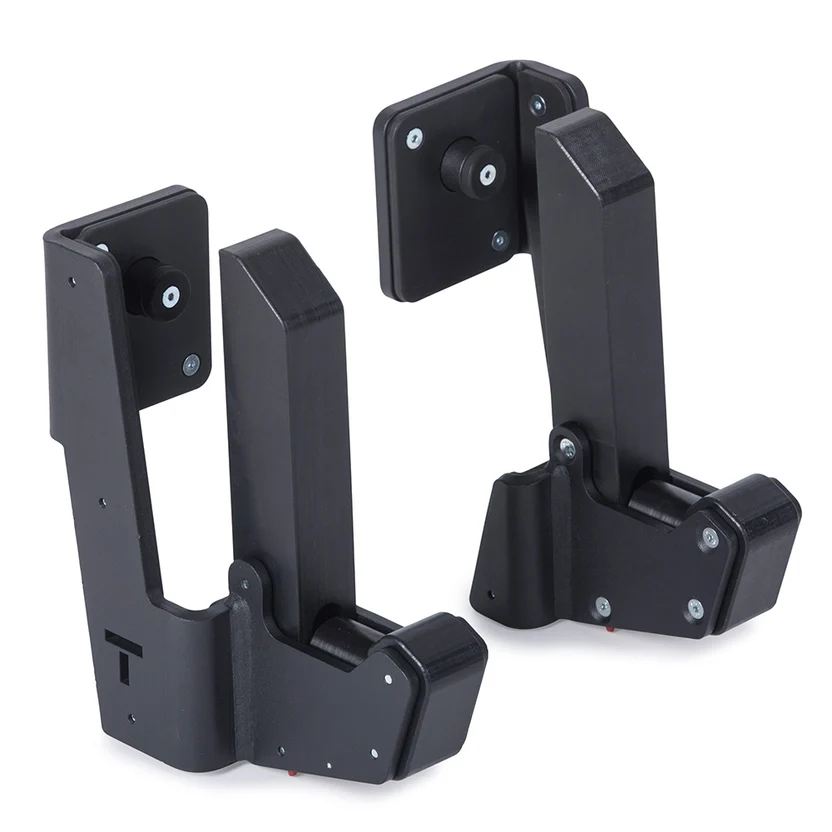
Those are the features that caught our attention. The trigger-operated adjustment is an inventive solution to a task most of us repeat every time we switch between squats and bench press. The roller is equally practical, especially if you have ever loaded a bar only to realize it is a few inches off center.
Titan updated the J-Hooks with additional protective material to help prevent scratches on squat rack uprights. Owners of the earlier version may want to consider upgrading, especially if they’ve noticed scratches or wear on their uprights.
GEARMASHERS REVIEW SUMMARY
TITAN Series QuickSlide™ Sandwich Roller J-Hooks
Best for
TITAN Series rack owners who frequently switch J-hook heights between lifts
Standout feature
Trigger-operated height changes without removing the J-hooks from the rack
What I like
The QuickSlide mechanism speeds up adjustments, the rollers help center the bar, and the revised protective lining helps prevent scratches on the uprights.
What to consider
Confirm both hooks are fully locked before loading the bar. The roller allows side-to-side movement while the bar is racked, and fit on other rack brands is not guaranteed.
Price
$189.99 per pair
Quick verdict
A useful upgrade for TITAN Series owners who adjust their rack often. The combination of sliding height adjustment, bar-centering rollers, and improved upright protection makes these more versatile than standard J-hooks.

TITAN Series QuickSlide™ Sandwich Roller J-Hooks - Pros and Cons
Pros
- QuickSlide adjusts height without removing the hooks.
- Rollers make it easy to center a racked barbell.
- Sandwich design and protective liners help protect the bar.
- Revised polymer lining helps prevent upright scratches.
- Titan-rated 1,200 lb capacity per pair.
- Convenient for shared racks and switching between lifts.
Cons
- Fit on other rack brands is not guaranteed.
- Moving mechanism adds complexity compared with basic J-hooks.
- Rollers allow sideways bar movement while racked.
- Both hooks must be fully locked before loading.
- Older versions may lack the improved upright protection.
- Grit between the lining and upright could still scratch the finish.
QuickSlide height adjustment
On a conventional J-hook, changing the height usually means lifting the entire hook off the upright and placing it into a different hole. With QuickSlide, you pull the trigger, tilt the hook back, slide it to the height you want, and tilt it forward to lock it into position. You can leave the hook on the rack throughout the adjustment.
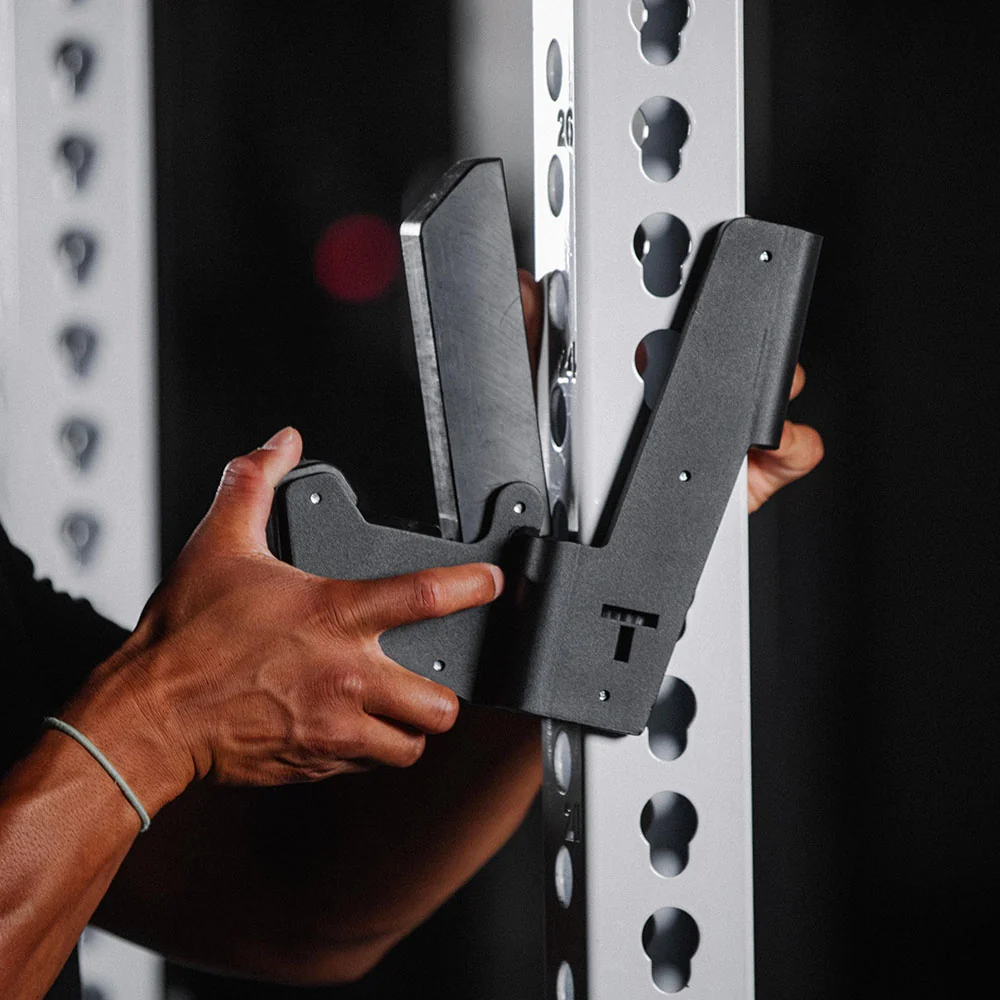
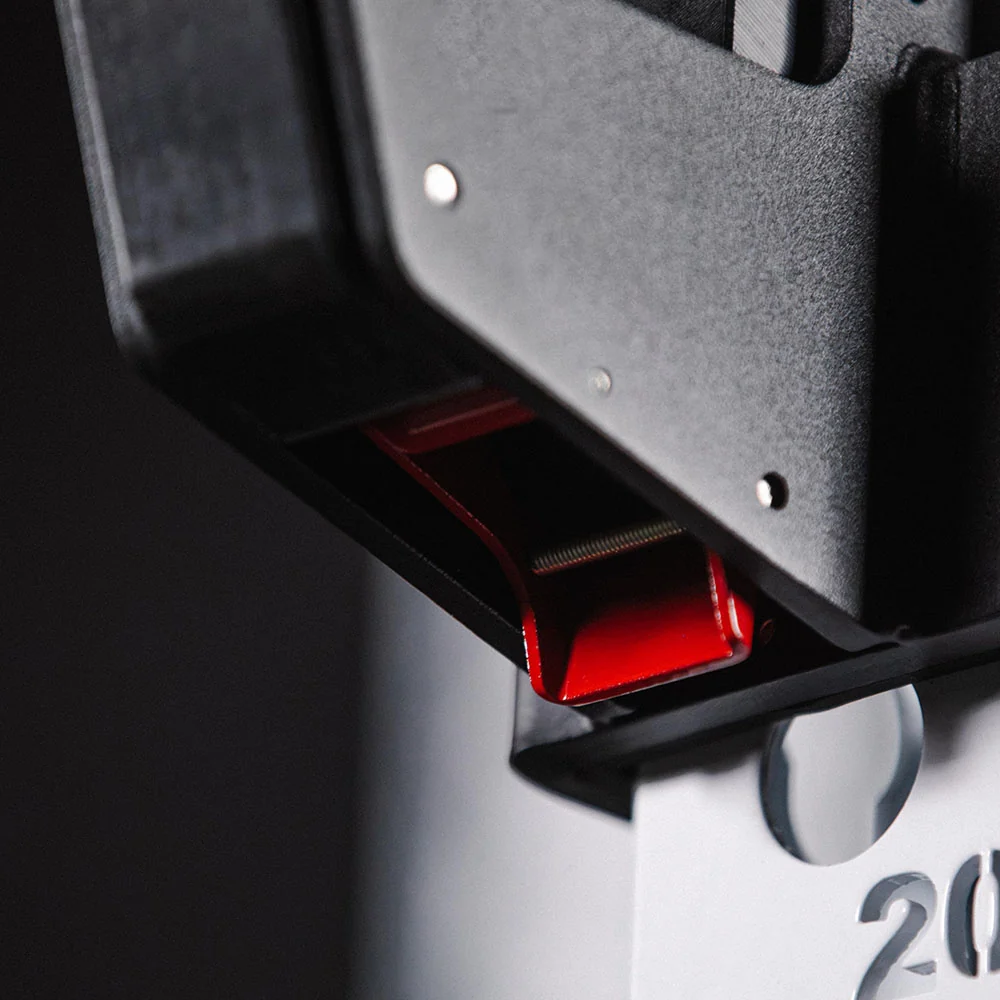
That sounds like a small change, but it should make setup easier if several people share a rack or you often change exercises. You still need to set both hooks at the same height and confirm they are fully locked before loading a bar. The convenience comes from avoiding the repeated remove-and-rehang routine.
Roller for centering the bar
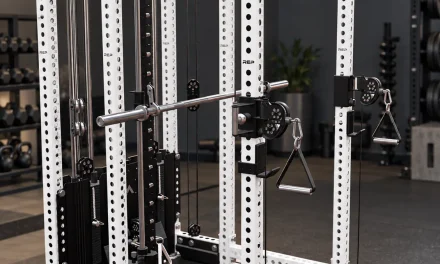
The built-in roller lets you move a racked barbell from side to side. When you are setting up for a bench press or squat, you can center the bar in the rack without lifting it out of the hooks. It is the kind of detail that may seem minor until you use it regularly.
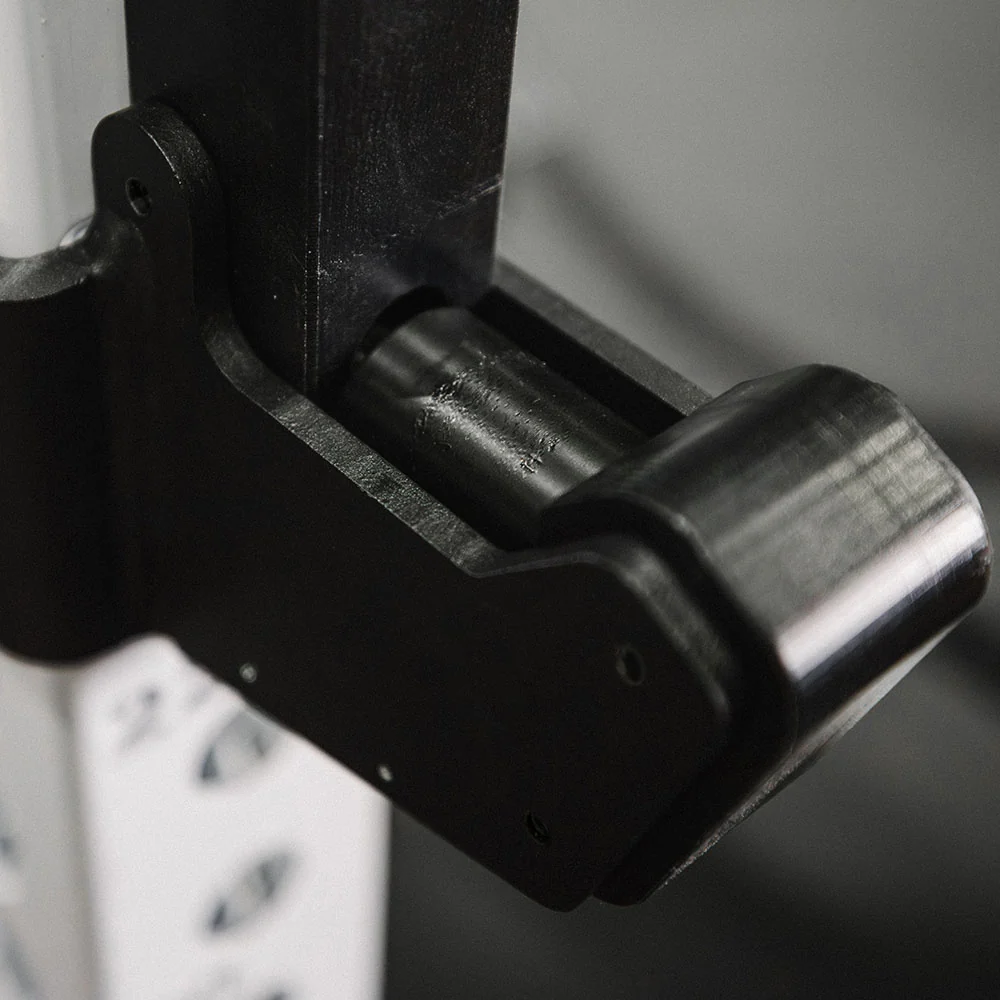
The roller is for positioning the bar while it is racked. As with any roller-style J-hook, take a moment to make sure the bar is centered before you unrack it.
While the roller is a nice feature, ours has already started showing some wear. My main concern is that it could eventually wear down enough that the bar no longer sits above the surrounding metal, allowing it to scrape against the J-Hook.
Bar and rack protection
The sandwich-style hook puts protective material where the bar rests and near surfaces it may contact during a rerack. Titan lists UHMW as the liner material and also describes PVC protection at wear points. That substantial coverage is a major part of the appeal: it helps keep the bar away from exposed steel and can reduce noise when you set it down.
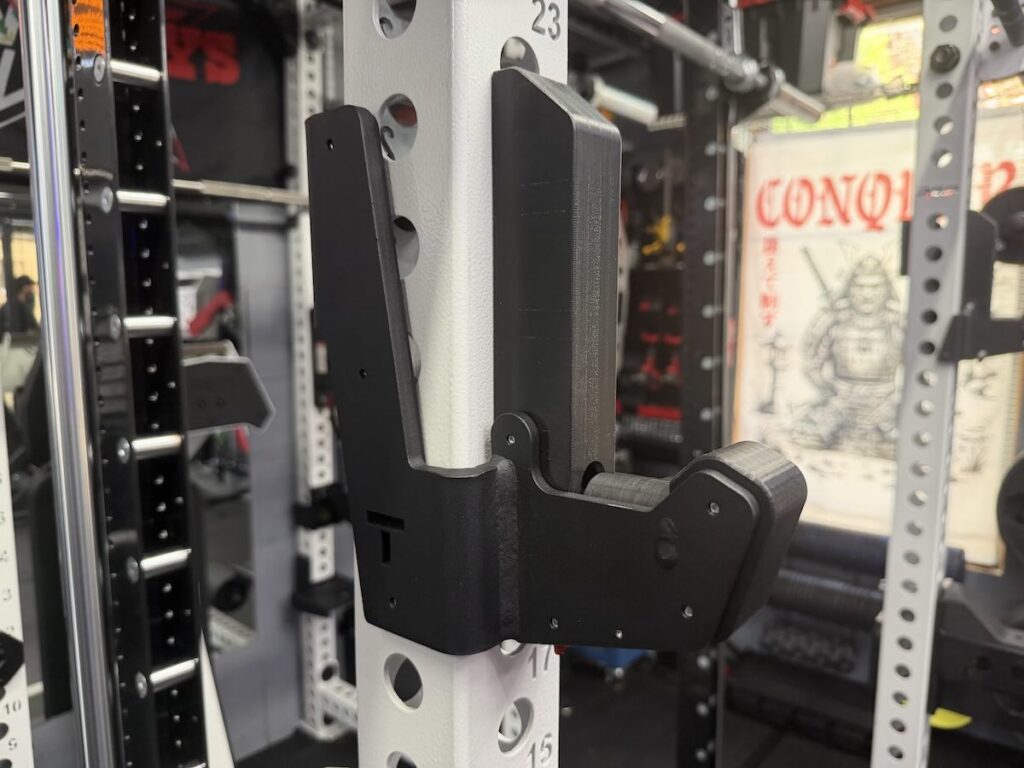
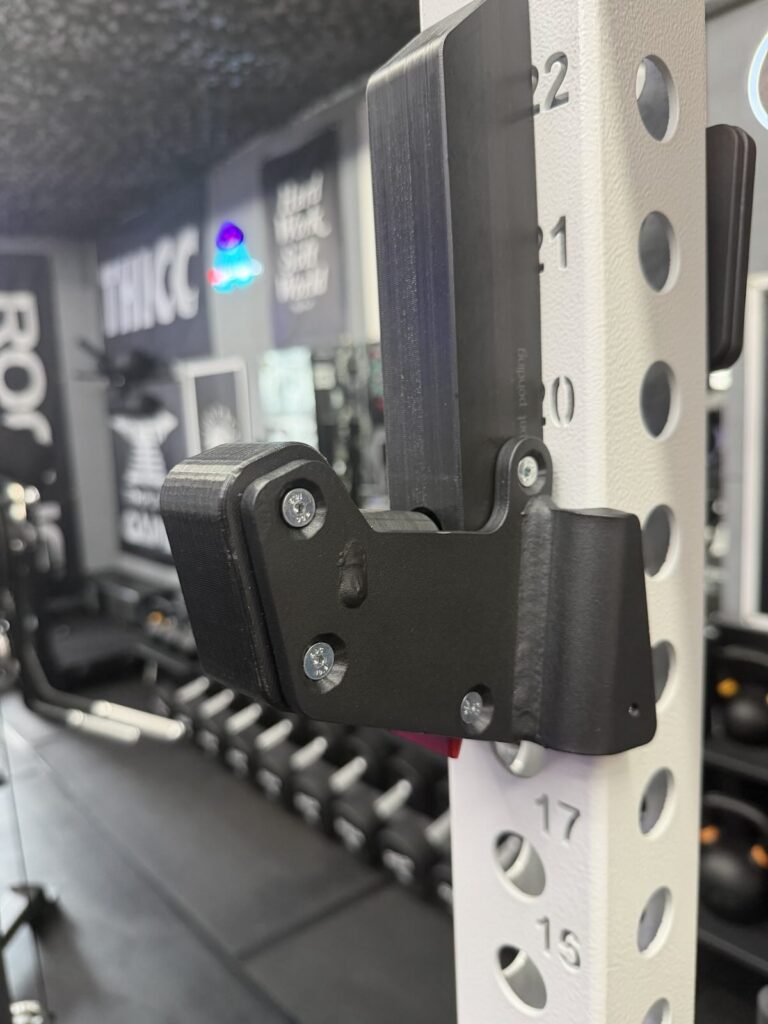
Titan also says the newer hooks have polymer protection on every rack-contact surface. That matters because a sliding attachment contacts the upright as you reposition it. We would still inspect the contact points and check for grit before sliding the hooks, especially on a rack with a finish you want to preserve.
An important revision for upright protection
This is a revised version of the QuickSlide J-hooks. The earlier design could scratch rack uprights as the hooks moved up and down. Titan addressed that concern by adding polymer protection to the surfaces that contact the upright. That is a meaningful update for a product whose main selling point is sliding along your rack. When shopping, particularly for older or discounted stock, check that the pair you receive has the added upright protection.
Titan also uses the QuickSlide adjustment system on its spotter arms. If you frequently move both your J-hooks and safeties between squat and bench heights, the matching spotter arms extend the same quick-adjustment convenience to the rest of your setup.
Compatibility and specifications
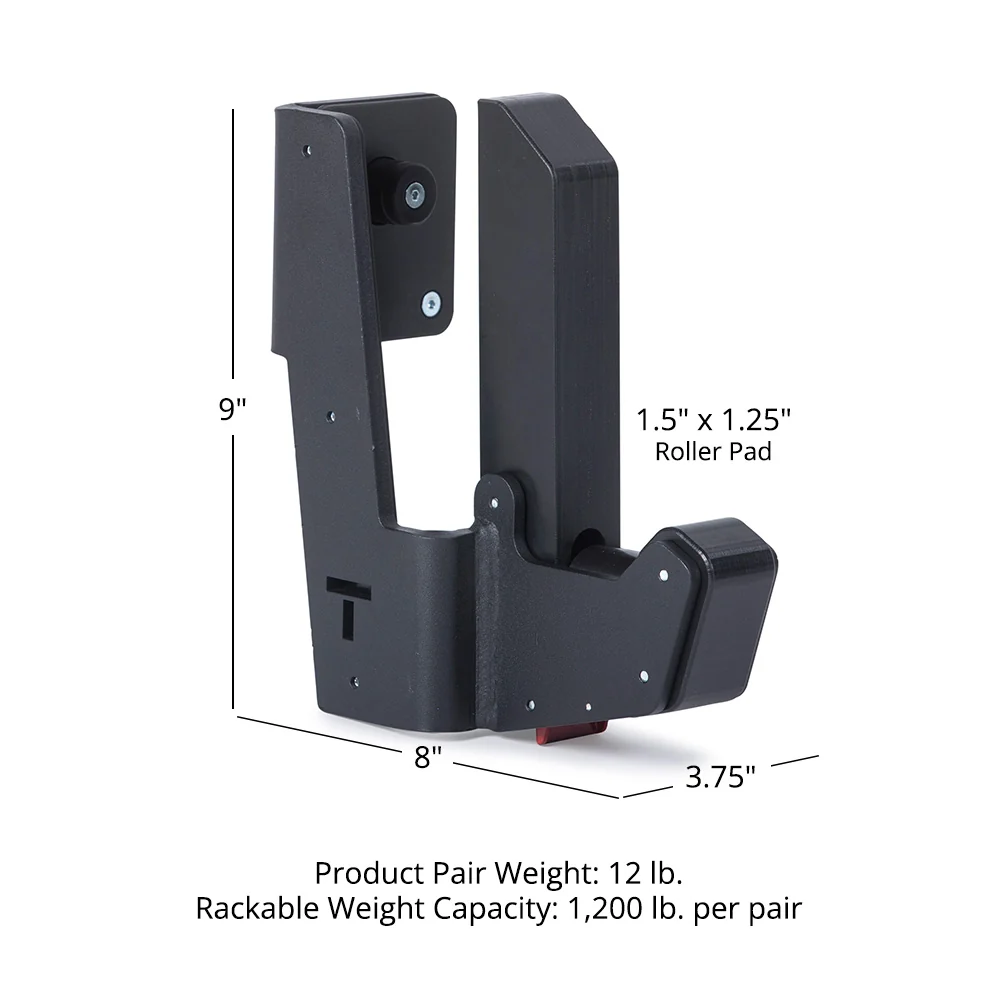
This is the TITAN Series version, designed for Titan’s top-of-the-line 3-by-3-inch rack lineup. Titan lists a 1,200-pound rackable capacity per pair and sells them as a matched left and right pair. Titan also makes X-3 Series QuickSlide Sandwich Roller J-Hooks for its X-3 racks, so choose the version intended for your rack. Do not assume that another 3-by-3-inch rack will fit just because its tubing has the same nominal size; rack dimensions, hole placement, and protective lining can affect the fit. Check your particular rack before buying.
Can you save with Scratch and Dent?
Titan sometimes offers these J-hooks as Scratch and Dent units at a discount. That can be a way to save a few dollars if you are comfortable with possible cosmetic imperfections. Read the listing for the exact condition and terms before ordering: Titan currently says its Scratch and Dent items are not eligible for returns or warranty claims. Its current QuickSlide Scratch and Dent listing describes the hooks as brand new and equipped with the added polymer protection, but availability and individual listings can change.
TITAN Series QuickSlide™ Sandwich Roller J-Hooks | Frequently Asked Questions
Are QuickSlide J-hooks worth upgrading to?
They’re useful for frequent height changes, shared racks, and easier bar centering.
Will they fit any 3-by-3-inch rack?
Yes, This version is designed for TITAN Series racks, but should work on any 3x3 rack. Verify compatibility with other brands; matching tubing dimensions alone doesn’t guarantee fit. We also tested it on a Rep Fitness Ares 2.0 rack without issue.
How Does the QuickSlide differ from traditional J-Hooks / J-Cups?
The QuickSlide has more parts than a basic J-hook, including rollers and a trigger that allows the J-hooks to slide up and down the rack's post. The roller can also let a bar move laterally while it is resting in the hook, so center it before lifting. If you plan to use them on a rack outside the TITAN Series, verify the actual fit first.
How does the QuickSlide adjustment work?
With the bar removed, pull the trigger, tilt back, slide, then tilt forward to lock. Confirm both hooks are fully engaged before loading.
What does the roller do?
It lets you reposition a racked bar sideways to center it before lifting.
Does the revised design protect rack uprights?
Titan added polymer protection to rack-contact surfaces after scratching concerns with the earlier design. Check for that protection when buying older stock.
How much weight can they hold?
Titan lists a 1,200-pound rackable capacity per pair. Your rack’s rating and installation requirements also apply.
Is there an X-3 version?
Yes. Titan sells separate X-3 Series QuickSlide Sandwich Roller J-Hooks. Choose the version intended for your rack.
Can Scratch and Dent units save money?
Sometimes. Check condition and terms carefully; Titan’s Scratch and Dent policy excludes returns and warranty claims.
Final thoughts
The TITAN Series QuickSlide Sandwich Roller J-Hooks combine three useful ideas: fast height changes, effortless bar centering, and extensive protection around the bar. The revised upright protection makes the sliding concept more compelling. The QuickSlide mechanism is the standout feature for a shared rack or a workout that moves between different barbell lifts, especially if you pair the hooks with QuickSlide spotter arms. The roller and protective liners make the pair feel like a thoughtful upgrade over standard J-hooks.
Product details and compatibility are based on Titan’s current listing.