



ANCORE Pro Review: A Portable Cable Machine You Can Use Almost Anywhere
The ANCORE Pro is one of the most interesting cable-training products I have used, largely because it provides legitimate resistance in a package small enough to carry with you. It can be attached to a squat rack in a home gym, secured with a strap indoors or outside, or paired with a sliding track mount when a rack is not available. Instead of dedicating a large section of the room to a functional trainer, you can add cable exercises to an existing training space without giving up valuable floor space.
GEARMASHERS REVIEW SUMMARY
ANCORE Pro
Best for
Home-gym owners, athletes, and traveling trainers who want cable resistance without a large machine.
Standout feature
Portable, true 1:1 cable resistance with multiple mounting options.
What I like
Compact design, excellent rack mount, and versatility for explosive and rotational exercises.
What to consider
Less smooth than a traditional cable system. Resistance tops out at 65 lb with the Plus set, and optional mounts increase the cost.
Price
$749 Standard / $848 Plus, as listed in your review.
Quick verdict
A versatile cable trainer that saves floor space and travels easily. Best for portability and flexible mounting rather than heavy lifting or traditional weight-stack smoothness. Gear Mashers
That portability does involve a compromise. The ANCORE Pro does not feel quite as smooth as a high-quality rack cable system with pulleys and a weight stack. It also tops out at 65 pounds of true 1:1 resistance. However, it offers something a conventional cable machine cannot: the ability to train in almost any location and perform explosive movements without relying on gravity or a moving weight stack.
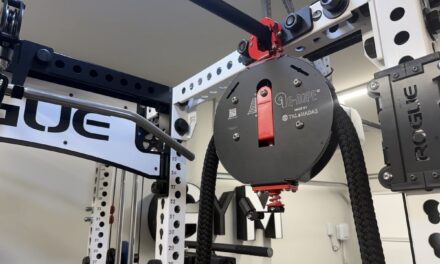
After using the ANCORE Pro with its different mounting options, the rack mount became my clear favorite. It makes the unit feel like a natural extension of the rack and allows its height to be changed quickly for presses, rows, curls, triceps work, chops and other movements. For a home-gym owner who already has a compatible rack, this is the setup I would choose.

Ancore Pro - Pros and Cons
Pros
- Compact enough for travel
- Can be used indoors or outdoors
- Multiple mounting options
- Excellent rack mount
- Strap mount can attach to racks, poles, beams and other secure structures
- Sliding track provides vertical adjustability for users without a squat rack
- True 1:1 resistance from 5 to 65 pounds
- Resistance plates are available in approximately 2.5, 5 and 10-pound increments
- Works well for explosive, ballistic and rotational movements
- Eight-foot cable provides a useful range of motion
- Optional Data Plate adds real-time GymAware performance metrics
- Does not require a large frame, weight stack or dedicated floor space
Cons
- Not as smooth as a quality rack cable system
- Limited to 65 pounds with the Plus resistance set
- Standard $749 package only reaches 55 pounds
- Changing plates is slower than moving a selector pin or turning a dial like on the ANCOREX
- The rack and sliding track mounts increase the total cost
- A single unit cannot duplicate bilateral cable-crossovers without purchasing a second unit
- The $349 Data Plate is useful but expensive for users who do not need velocity-based training data
ANCORE Pro Review: The Quick Take
The ANCORE Pro is a compact, plate-adjustable cable resistance system designed for athletes, home gyms, personal trainers, physical therapists and coaches. The standard configuration retails for $749 and provides resistance from 5 to 55 pounds. The Plus configuration costs $848 and includes the additional plates needed to reach the full 65-pound capacity. Resistance is measured at a true 1:1 ratio, so 65 pounds represents approximately the same amount of force as 130 pounds displayed on a traditional 2:1 cable machine.
I would not buy the ANCORE Pro expecting it to replace every function of a full functional trainer. I would consider it if you want cable resistance without sacrificing floor space, need a system that can travel with you, or want resistance that works especially well for fast and explosive movements.
ANCORE Pro Specifications
| Specification | ANCORE Pro |
|---|---|
| Starting price | $749 with Standard resistance set |
| Price with 65-pound Plus set | $848 |
| Resistance range | 5–55 pounds Standard; 5–65 pounds Plus |
| Resistance ratio | 1:1 |
| Resistance system | Torque-loaded springs with twist-on plates |
| Plate increments | Approximately 2.5, 5 and 10 pounds |
| Cable length | 8 feet |
| Cable material | High-strength synthetic Dyneema fiber |
| Maximum plates | 3 per side |
| Fully loaded weight | Approximately 9 pounds |
| Fully loaded dimensions | 12 x 4.75 x 3 inches |
| Included mount | Strap Mount |
| Other mounts | Rack, Wall and Sliding Track mounts |
| Warranty | 2 years |
| Trial | 30 days for U.S. customers |
How the ANCORE Pro Creates Resistance
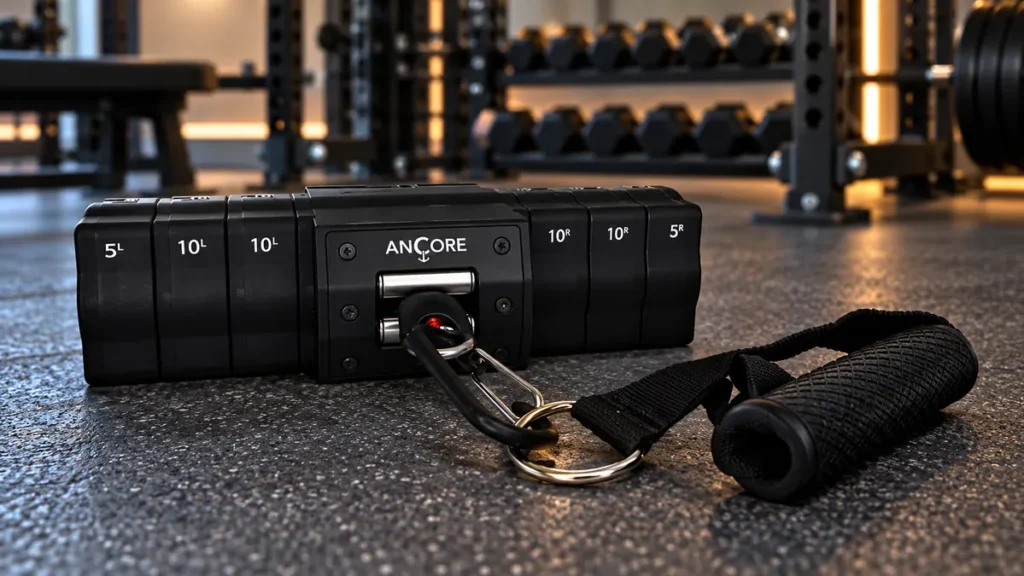
The ANCORE Pro does not use a weight stack. Its base unit starts at approximately 5 pounds of resistance and uses torque-loaded springs. Additional resistance comes from plates that twist onto both sides of the unit. ANCORE offers plate pairs in approximately 2.5-, 5- and 10-pound increments, allowing the resistance to be changed without adding much bulk to the system.

The standard package includes enough plates to reach 55 pounds. To access the advertised 65-pound maximum, you need the Plus set, which adds another pair of 10-pound plates. At maximum resistance, three 10-pound plates are installed on each side of the unit while the base provides the remaining 5 pounds.
One detail that can be confusing is how ANCORE resistance compares with the number shown on a traditional cable stack. The ANCORE Pro uses a 1:1 ratio, which means the listed resistance is the force you are working against. Many functional trainers use a 2:1 pulley ratio. On one of those machines, a stack set at 130 pounds may produce roughly 65 pounds of resistance at the handle. That makes the ANCORE Pro’s 65-pound maximum more capable than it may initially sound, although it still will not provide enough resistance for every heavy strength exercise.
Mounting Options
The mounting system is one of the ANCORE Pro’s biggest strengths. A compact resistance unit is only useful if it can be positioned securely at the height and angle needed for different exercises, and ANCORE offers several ways to do that.
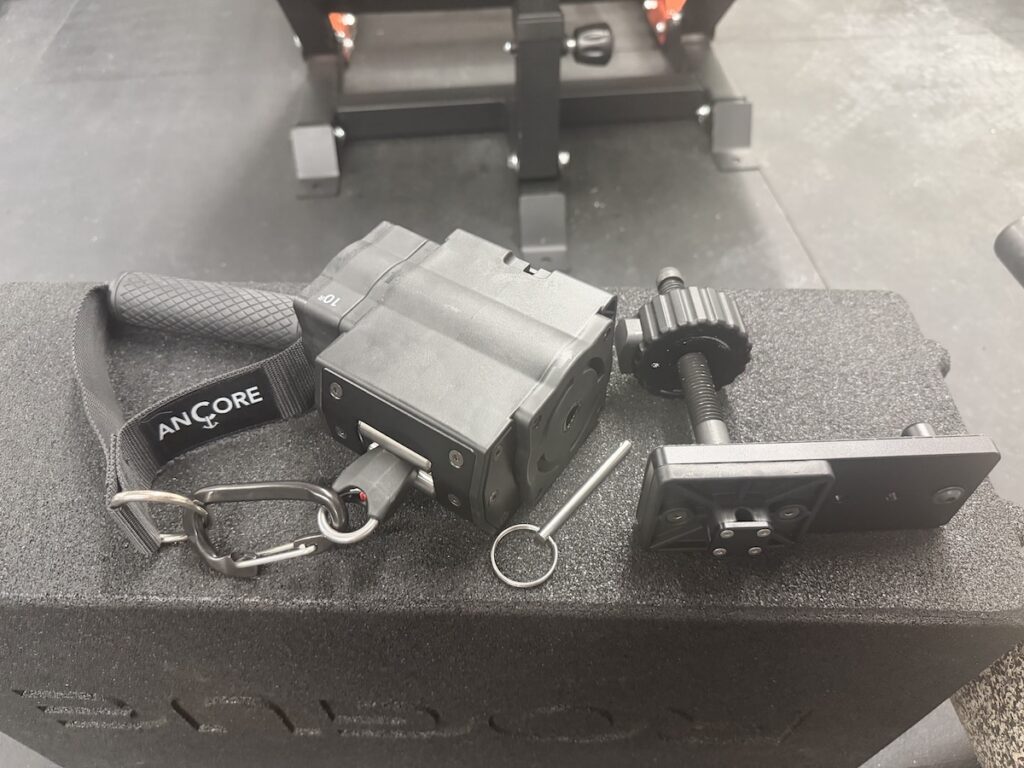
The ANCORE Pro uses a safety pin which slides into a hole that keeps the unit attached to the mounting bracket.

Rack Mount: My Favorite Option
I absolutely love the rack mount. If you already own a compatible squat rack, it is the best way to integrate the ANCORE Pro into a home gym. The mount attaches the unit securely to the upright and makes it feel more like a permanent part of the rack instead of a portable accessory that has been strapped onto it.
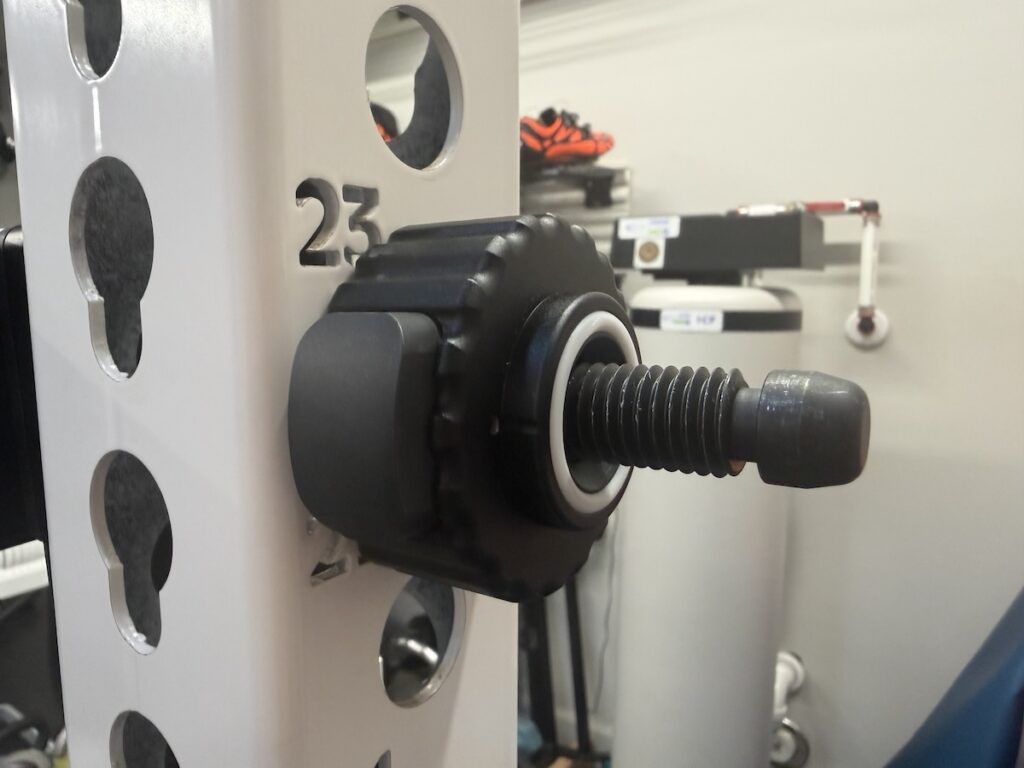
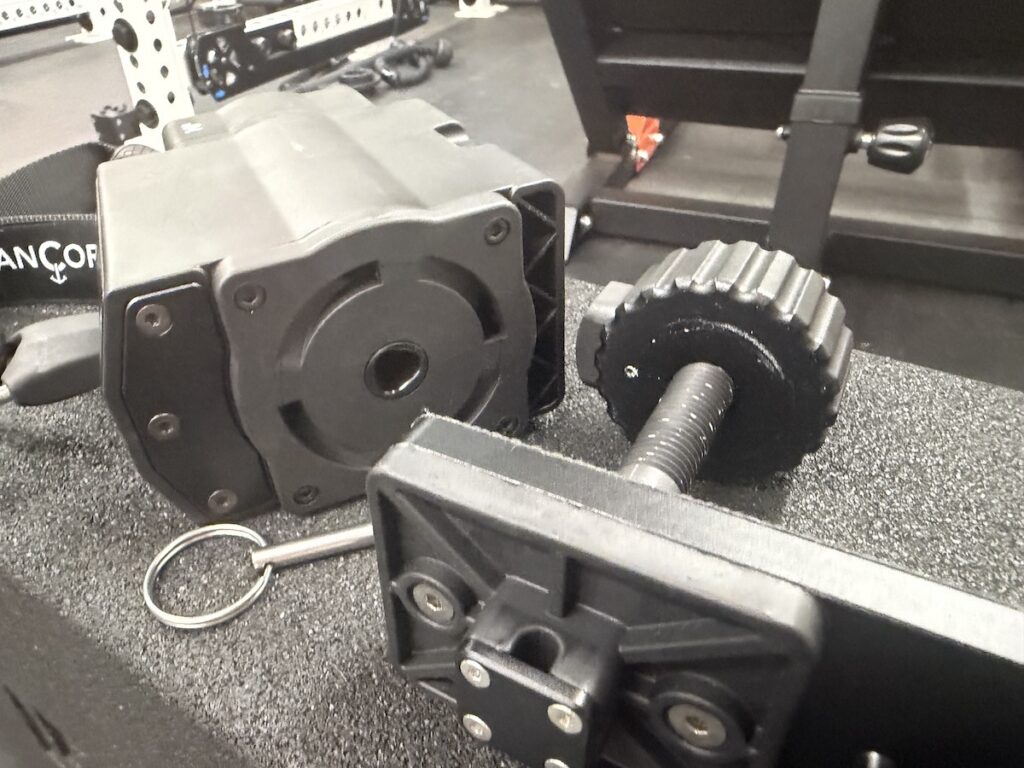
Being able to move the unit between low, middle and high positions opens up a large exercise selection. A low position works well for curls, upright rows, lateral raises and lower-body movements. Mounting it around chest height is useful for presses, rows, rotations and Pallof presses. A higher position makes pulldowns, triceps extensions, chops and face pulls possible.
What also makes this mount super cool is the quick release button that allows you to quickly add or remove the adapter bolt. Fantastic design.
ANCORE lists the rack mount as compatible with uprights ranging from 2 to 4 inches, hole spacing from 1 to 4 inches, and hole diameters from 5/8 to 1 inch. Even with that broad compatibility, I would verify your rack dimensions before ordering.
Strap Mount: The Most Portable Option
The strap mount is included with the ANCORE Pro and is the main reason the unit can be used in so many locations. It can wrap around many squat racks, poles, beams and other secure fixtures, with ANCORE recommending a mounting circumference between 10 and 14 inches.

This is the mount that makes outdoor training and travel possible. You are not restricted to a dedicated gym or even a rack, provided you have a suitable structure that can safely handle the direction and amount of force being applied. The strap takes a little more setup than the rack mount, but its flexibility is difficult to match.
Sliding Track Mount: A Rack-Free Setup
For anyone who does not own a squat rack, the sliding track mount is probably the most complete solution. It uses a six-foot wall-mounted track that allows the ANCORE Pro to move vertically. That gives you many of the height adjustments associated with a functional trainer while keeping the footprint extremely small.
The tradeoff is that this is no longer a truly portable installation. The track must be secured properly into wood studs, and it adds to the overall price. Still, it is an attractive option for a garage gym, training studio or physical therapy space where floor space is limited.
Portability: A Cable Trainer That Can Travel
Traditional cable machines are among the least portable pieces of gym equipment. They are large, heavy and generally stay wherever they are assembled. The ANCORE Pro takes the opposite approach. The fully loaded unit weighs about 9 pounds and measures only 12 inches long, 4.75 inches wide and 3 inches high.
That size makes it realistic to take the unit to a client, move it between training areas, pack it for a trip or bring it outdoors. Personal trainers and coaches can create a cable station without transporting plates, a rack-mounted pulley tower or a large selectorized machine. Home-gym owners can also remove the system when it is not in use instead of allowing another machine to occupy permanent floor space.
You will still need to carry the mount, handle and resistance plates, so it is not literally a complete gym in a pocket. Nevertheless, it is remarkably compact for the amount of exercise variety it provides.
Training Experience
The ANCORE Pro works best when its unique resistance system is treated as a feature rather than judged solely as an imitation of a weight stack. The spring mechanism does not depend on gravity, and tension is present whether the cable is moving horizontally, vertically or diagonally. That makes the unit useful for concentric, eccentric and isometric work at a variety of angles.
It is especially good for explosive movements. Athletes can accelerate through rotational presses, chops, punches, rows and sports-specific patterns without having to lift a weight stack and then wait for it to settle. The compact unit also makes it easy to train in open areas where there is room to move rather than being confined to a traditional cable station.
The resistance plates make the load easy to understand. Twisting plates on and off is simple, and the 2.5-, 5- and 10-pound options provide useful progression. However, changing resistance is not as fast as moving a pin on a selectorized stack. This matters during drop sets, circuits or sessions in which several athletes need different loads. The newer ANCOREX addresses that issue with an integrated adjustment dial, but it is substantially more expensive and much less portable.
Is the ANCORE Pro as Smooth as a Traditional Cable Machine?
No. In my experience, the ANCORE Pro is not as smooth as a good rack cable system. A quality cable tower uses pulleys and a moving weight stack to create a familiar, fluid feel. The ANCORE Pro uses torque-loaded springs, so the sensation is different and the resistance does not feel identical throughout every exercise.
That does not make the ANCORE Pro unpleasant to use. It simply means buyers should have the right expectation. If smoothness is your highest priority and you have the room for a conventional cable system, a rack-mounted tower or functional trainer will probably feel better. If portability, mounting flexibility, explosive movement and a nearly nonexistent footprint matter more, the ANCORE Pro has a major advantage.
Data Plate Powered by GymAware
The optional Data Plate costs $349 and twists onto the ANCORE Pro in the same manner as a resistance plate. Powered by GymAware technology, it adds real-time velocity-based training analysis through the Flex app. The system can measure metrics such as repetition count, velocity, power and force, giving athletes and coaches immediate feedback instead of relying only on the selected resistance.
This is most valuable when the goal is to measure performance rather than simply complete a workout. A coach can monitor whether an athlete is maintaining speed, compare output between sides, examine power during rotational movements or identify when velocity begins to fall as fatigue increases. Those capabilities pair particularly well with the ANCORE Pro’s strength in explosive training.
The Data Plate uses USB-C charging and ANCORE rates the battery for approximately 55 hours per charge. It does not require extra mounting hardware, and the free Flex app does not add a subscription fee.
At $349, however, it is not an automatic purchase for everyone. Most home-gym owners do not need detailed velocity-based training metrics for curls, triceps extensions and general accessory work. Competitive athletes, strength coaches, physical therapists and data-focused users will get more value from it. For those users, the Data Plate turns the ANCORE Pro from a portable cable trainer into a compact performance-testing tool.
ANCORE vs. ANCORE Pro vs. ANCOREX
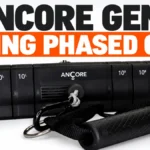
ANCORE currently offers three resistance units aimed at different users. The original ANCORE is the least expensive and lightest option. The ANCORE Pro upgrades the construction and is positioned for athletes, coaches and higher-volume use. ANCOREX is the commercial model, using an internal pneumatic air spring and adjustment dial instead of external plates.
Note: The original ANCORE is being phased out by the end of October 2026, so that the company can focus on the ANCORE Pro and ANCOREX to choose from.
| Feature | ANCORE | ANCORE Pro | ANCOREX |
|---|---|---|---|
| Starting price | $599 | $749 | $1,399 |
| Best for | Home and garage gyms | Athletes, coaches, training facilities and physical therapy | Commercial gyms and high-volume facilities |
| Resistance technology | Torque-loaded springs | Torque-loaded springs | Pneumatic air spring |
| Adjustment method | Twist-on/off plates | Twist-on/off plates | Integrated dial |
| Resistance range | 5–65 lbs | 5–65 lbs | 5–80 lbs |
| Adjustment increments | Approx. 2.5, 5 and 10 lbs | Approx. 2.5, 5 and 10 lbs | 5 lbs |
| Cable length | 8 feet | 8 feet | 10 feet |
| Fully loaded weight | Approx. 7 lbs | Approx. 9 lbs | Approx. 23 lbs |
| Dimensions | 12 x 3.25 x 3 in. | 12 x 4.75 x 3 in. | 14 x 9.5 x 6 in. |
| Mounts | Rack, wall, strap and sliding track | Rack, wall, strap and sliding track | Gliding, quick-disconnect or stationary rack mounts |
| Data Plate compatible | Yes | Yes | No |
| Best reason to buy | Lowest price | Best combination of durability and portability | Fast adjustments, heavier resistance and commercial use |
The ANCORE Pro is the best fit of the three for my needs because it retains the portability of the original system while offering a more robust machined-metal and glass-fiber-reinforced body. ANCOREX is the more refined commercial product, and its dial makes resistance changes much faster, but the 23-pound unit is not something I would choose primarily for travel. It also uses its own mounting system and is not compatible with ANCORE Pro mounts.
Who Should Buy the ANCORE Pro?
The ANCORE Pro makes the most sense for:
- Home-gym owners who want cable exercises without another large machine
- Athletes who perform explosive, rotational or sports-specific movements
- Personal trainers who travel to clients or train in multiple locations
- Coaches who need several compact cable stations around a facility
- Physical therapists who want resistance that works from multiple angles
- Anyone who wants to train outdoors or while traveling
- Rack owners who want to add a versatile cable system with almost no floor-space requirement
It may not be the best choice for lifters who primarily want very heavy pulldowns, rows or lower-body cable movements. It is also harder to justify if you already own a smooth functional trainer with enough available weight and do not need portability.
Final Verdict: Is the ANCORE Pro Worth It?
The ANCORE Pro is worth considering because it solves a problem most cable systems cannot. It provides meaningful 1:1 cable resistance in a unit compact enough to travel, mount to an existing rack or use outside. The range of mounting options is excellent, and the rack mount is easily my favorite way to use it. It turns the ANCORE Pro into a natural addition to a home-gym rack without requiring a large pulley tower or weight stack.
Its greatest weakness is the feel. It is not as smooth as a good rack cable system, and the 65-pound maximum will limit heavier exercises. The $749 starting price also climbs quickly when the 65-pound plate set, a premium mount or the $349 Data Plate is added.
Even with those limitations, few products provide this combination of portability, mounting flexibility and explosive-training capability. If you have enough room and only care about the traditional cable-machine experience, buy a quality cable tower. If you want cable resistance that can move from your rack to the outdoors and then travel with you, the ANCORE Pro is a uniquely useful training tool.
Prices and specifications were verified on August 26, 2026, and may change.